what are examples of effective team dynamics serves as our guiding beacon today, shedding light on the intricate art and measurable science behind human collaboration in modern workplaces. When diverse minds synchronize, magic happens, turning ordinary workspaces into extraordinary innovation engines where collective intelligence far surpasses individual capability.
Across modern industries, navigating complex challenges demands a departure from isolated efforts into deeply resonant, empathetic, and highly aligned group behaviors. By examining how psychological safety, constructive friction, and servant leadership weave together, we uncover the exact blueprints that allow modern enterprises to weather unexpected market storms and achieve unprecedented breakthroughs.
Diverse human minds synchronizing together can produce astonishing breakthroughs that isolated thinkers might never achieve.
When distinct cognitive maps converge within a shared professional ecosystem, the resulting friction and alignment ignite unexpected avenues of human achievement. Across modern industries, the solitary genius working in a vacuum is steadily giving way to interconnected networks of minds whose collective output shatters previous performance ceilings. This evolution is not merely a byproduct of resource pooling, but a profound transformation of how human consciousness operates when supported by robust collaborative frameworks.
The journey from a loose aggregation of independent professionals to a synchronized operational engine relies on deeply rooted psychological mechanisms. Social identity theory explains that when individuals adopt a shared team identity, personal biases recede to make room for collective goals, fostering a psychological safety net where unconventional ideas can be voiced without fear of professional reprisal. Furthermore, transactive memory systems develop naturally within high-performing units, allowing members to implicitly map who holds specific expertise, thereby distributing cognitive loads efficiently across the entire group.
This invisible architecture reduces individual burnout while maximizing the utilization of specialized knowledge, turning a roomful of diverse thinkers into a unified powerhouse capable of navigating complex modern challenges.
Underlying Psychological and Neurological Mechanisms of Collective Intelligence
Beneath the surface of spirited boardroom debates and quiet coding sprints lies a fascinating biological reality that dictates how human teams achieve breakthroughs. Recent findings in interpersonal neuroscience utilizing hyperscanning technologies reveal that when collaborators engage in high-level problem solving, their neural firing patterns actually synchronize in real time. Specifically, coupling occurs within the prefrontal cortex and the temporoparietal junction, regions heavily implicated in empathy, perspective-taking, and strategic planning.
This shared neurological rhythm allows team members to anticipate each other’s moves, complete half-formed concepts effortlessly, and process incoming data streams as a singular processing unit rather than as isolated nodes.
Complementing this biological alignment is the intentional management of cognitive diversity, which prevents the stagnation of groupthink. When individuals with divergent backgrounds—ranging from analytical statisticians to intuitive designers—tackle a complex challenge, their differing mental models clash constructively. This friction triggers cognitive dissonance, forcing the brain to reevaluate entrenched assumptions and synthesize novel solutions.
True collaborative synergy occurs not when minds think alike, but when disparate cognitive structures harmonize to perceive patterns invisible to any single observer.
By balancing this intellectual friction with deep neurological entrainment, teams unlock a tier of problem-solving velocity that consistently outpaces the linear capabilities of even the most gifted solo practitioners.
Real-World Scenarios Demonstrating Collective Superiority
History and modern commerce offer compelling evidence that collective intelligence routinely surpasses individual contributions when stakes are exceptionally high. Examining specific operational environments highlights how synchronized human dynamics translate raw theoretical potential into tangible, groundbreaking outcomes across vastly different industries.
The following examples illustrate situations where collective synergy eclipsed individual efforts:
- During the emergency restructuring of global supply chains amidst pandemic disruptions, cross-functional logistics units combined predictive data science with ground-level warehouse intuition, resolving distribution bottlenecks three times faster than isolated algorithmic planners could project.
- In software engineering sprints focused on deploying critical cybersecurity patches, multidisciplinary squads utilizing pair programming and real-time code reviews identified zero-day vulnerabilities with a near-zero error rate, significantly outperforming legacy models reliant on individual code authorship.
- Within biomedical research laboratories tackling rare genetic disorders, bioinformaticians, clinical trial coordinators, and patient advocates synthesized qualitative patient experiences with quantitative genomic sequencing to accelerate diagnostic tool approvals by nearly two years.
Dimensions of Collaborative Synergy, What are examples of effective team dynamics
Understanding the multi-faceted nature of teamwork requires examining the specific elements that dictate success or failure during intense collaborative efforts. The matrix below Artikels the critical dimensions that influence how diverse human minds interact within professional environments.
| Cognitive Styles | Behavioral Traits | Output Metrics | Potential Pitfalls |
|---|---|---|---|
| Analytical and Convergent | Methodical, detail-oriented, systematic validation | Precision, error reduction, structural stability | Paralysis by analysis, resistance to rapid pivoting |
| Creative and Divergent | Exploratory, boundary-pushing, metaphorical thinking | Novelty generation, paradigm shifts, visionary concepts | Scope creep, lack of operational feasibility |
| Pragmatic and Execution-Focused | Resource-conscious, timeline-driven, tactical | Velocity, deliverable completion, milestone adherence | Short-termism, overlooking long-term strategic value |
| Empathic and Relational | Active listening, bridge-building, conflict mediation | Team cohesion, psychological safety, retention | Over-consensus seeking, avoidance of necessary friction |
Invisible currents of emotional resonance dictate whether a collective thrives or slowly suffocates under pressure.
Beneath the gleaming metrics of modern corporate productivity lies an unseen ecosystem where human sentiment acts as the ultimate survival metric. When high-performing units face severe operational stress, their ultimate trajectory is rarely determined solely by raw intellectual horsepower or technical proficiency. Instead, a silent, atmospheric chemistry dictates whether the group accelerates toward breakthrough innovations or quietly deteriorates from within.
High-performing squads thrive on trust and open communication, proving that shared success begins within. When members align their actions with a robust belief and value system , inner motivation transforms into collective brilliance. This deep-rooted harmony drives groups forward, turning everyday collaboration into extraordinary achievements that inspire everyone involved.
This subterranean pulse of collective emotion creates an invisible architecture of trust that either supports bold experimentation or triggers a defensive retreat into self-preservation.
Psychological safety functions as the foundational bedrock upon which all sustainable, innovative risk-taking and authentic vulnerability are constructed. Grounded in extensive organizational research popularized by Harvard Business School studies, psychological safety is the shared belief that the team is safe for interpersonal risk-taking and that no member will be penalized or humiliated for speaking up with ideas, questions, concerns, or mistakes.
When this vital climate is established, the human brain shifts away from the primitive amygdala-driven survival response, allowing the prefrontal cortex to engage fully in creative problem-solving and radical transparency. Without this essential foundation, brilliant professionals naturally withhold half-formed concepts, choosing career safety over disruptive innovation, thereby slowly suffocating the collective potential under the weight of unspoken anxieties.
Managerial procedures for eradicating brainstorming fear
Leaders carry the heavy operational responsibility of systematically dismantling the paralyzing fear of failure that routinely paralyzes creative sessions. To transform a hesitant room into an incubator of bold experimentation, managers must implement precise, methodical behavioral protocols during every ideation phase. These procedural steps deliberately rewire the traditional hierarchy of critique and replace defensive posturing with constructive exploration.
Management must first enforce a strict temporal separation between the generation of ideas and their subsequent evaluation, ensuring that initial brainstorming sessions feature zero critical commentary. By explicitly scheduling dedicated ‘wild concept hours,’ teams are encouraged to present intentionally absurd or high-risk propositions without the immediate threat of professional judgment. Furthermore, leadership must model radical vulnerability by openly sharing their own professional missteps and past failed initiatives at the outset of the session.
This deliberate self-exposure neutralizes the perceived stigma associated with error, reframing mistakes not as permanent career blemishes, but as mandatory data points on the pathway to unprecedented discovery.
To institutionalize this fearless environment, operational frameworks often incorporate specific guiding philosophies into daily operations, as illustrated in the foundational reminder below.
Innovation happens at the exact intersection where the fear of judgment is completely replaced by the relentless pursuit of truth.
Daily verbal habits fostering cross-functional trust
Building absolute trust across diverse departmental silos requires consistent, micro-level behavioral adjustments embedded within routine daily interactions. The microscopic wording choices professionals make during ordinary briefings and casual hallway exchanges accumulate over time to shape the emotional climate of the entire organization. Adopting specific, intentional communication patterns ensures that colleagues consistently feel valued, understood, and professionally secure.
Integrating these daily verbal practices into cross-functional collaboration actively repairs fractured communication lines and builds robust mutual reliability:
- Begin collaborative reviews by explicitly acknowledging and validating the unique expertise that colleagues from other departments bring to the table.
- Replace declarative directives with exploratory inquiries, shifting phrasing from commands to collaborative invitations for collective input.
- Acknowledge and articulate personal gaps in knowledge openly during cross-departmental alignment meetings to normalize continuous organizational learning.
- Reframe unexpected project setbacks during daily stand-ups by publicly attributing them to systemic variables rather than individual incompetence.
- Express sincere appreciation for dissenting viewpoints in real-time, verbally thanking colleagues who challenge prevailing consensus assumptions.
Visual concept description of an empathetic crisis network
Visualize a dimly lit, high-stakes corporate war room at the height of a critical operational crisis, where a multidisciplinary team of engineers, designers, and financial strategists surrounds a massive holographic display projecting chaotic market failure data. In this high-pressure environment, the physical air feels thick with tension, yet an extraordinary, luminous visual phenomenon permeates the space, completely invisible to standard security cameras.
Glowing, translucent threads of vibrant amber and soft cyan light weave continuously between the individuals, forming a dynamic, living web of emotional resonance. When the lead software architect leans forward, her shoulders visibly trembling with the weight of an impending system collapse, a brighter strand of golden light instantly anchors from the adjacent product manager’s chest to hers, physically stabilizing her posture.
Across the table, as a junior data analyst hesitates to voice a controversial metric that contradicts executive assumptions, the senior director turns her body language completely toward him, while the surrounding light-threads pulse in a warm, rhythmic cadence that visually absorbs his hesitation. The entire group is enveloped in a resilient, translucent dome of interconnected energy that actively deflects sharp, jagged spikes of panic radiating from the exterior market chaos.
This intricate, glowing neural network of empathy does not eliminate the external crisis, but it fundamentally transforms how human biology processes the pressure, binding the diverse minds into a singular, unbreakable organism capable of navigating the storm with absolute synchronized grace.
Friction within a collective does not automatically signal failure but often points toward untapped creative potential.
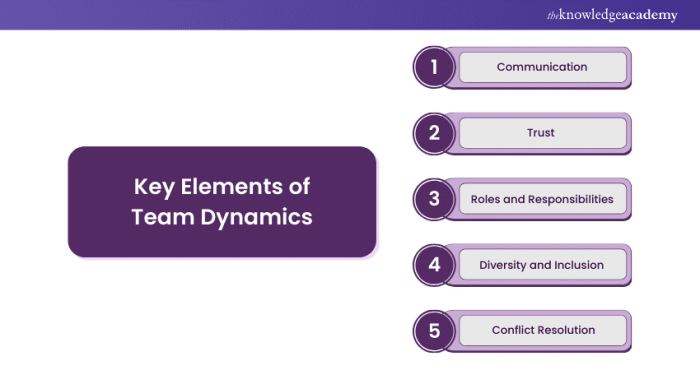
Source: theknowledgeacademy.com
When divergent perspectives collide within a shared workspace, the immediate environment often crackles with an intensity that feels dangerously close to structural collapse. Observers might mistake this vocal sparring for professional hostility, yet history repeatedly demonstrates that the most stagnant teams are frequently those plagued by artificial harmony. Beneath the surface of polite agreement lies a graveyard of unexpressed insights, whereas turbulent exchanges often serve as the crucible where raw, vulnerable concepts are rigorously tested against reality.
Navigating this delicate tension requires a cultural shift in how leadership perceives dissent, moving away from quiet compliance and toward a model of rigorous, respectful intellectual combat.
Constructive friction functions as an essential refining fire, taking the rough, half-formed silhouettes of early innovations and hammering them into bulletproof operational strategies. When brilliant minds approach a complex challenge from fundamentally opposing angles, their initial collisions inevitably expose hidden blind spots, structural flaws, and fragile assumptions that a unified echo chamber would conveniently ignore. This dynamic dialogue acts as a stress test for enterprise initiatives.
As team members vigorously defend their positions with data and lived experience, weak arguments naturally wither away while robust elements merge into comprehensive solutions. What begins as a chaotic clash of egos gradually transforms into an architectural blueprint of execution. By forcing abstract visions through the gauntlet of critical peer review, the collective strips away vanity metrics and impractical workflows, leaving behind a streamlined, resilient strategy capable of withstanding the harshest market realities.
Through this iterative abrasion, ideas shed their initial imperfections and emerge hardened, precise, and ready for deployment.
Dissent is not the enemy of progress; it is the raw material from which durable breakthroughs are forged.
Comparative Analysis of Workplace Conflict Dynamics
Understanding the exact nature of workplace friction requires a clear distinction between destructive interpersonal hostility and productive intellectual debate. The following breakdown maps the operational behaviors and trajectories of both phenomena within modern organizational ecosystems.
| Metric | Toxic Interpersonal Conflict | Healthy Intellectual Debate |
|---|---|---|
| Root Causes | Ego protection, territorial insecurity, unmanaged personal grievances, and scarcity mindsets regarding recognition. | Shared passion for quality, divergent strategic visions, objective pursuit of excellence, and diverse domain expertise. |
| Communicative Expressions | Ad hominem attacks, sarcastic undertones, interrupting peers, emotional defensiveness, and silent withholding of crucial information. | Rigorous questioning of assumptions, data-backed counterarguments, active listening, and passionate defense of ideas rather than persons. |
| Immediate Impacts | Fragmented team morale, psychological unsafety, communication silos, and immediate paralysis of project momentum. | Temporary discomfort, heightened mental engagement, cross-pollination of concepts, and rapid exposure of operational vulnerabilities. |
| Long-Term Resolutions | Executive intervention, forced compromises that leave lingering resentment, or high-value employee attrition. | Unified strategic alignment, robust operational frameworks, deep mutual respect, and accelerated innovation cycles. |
Structured Mediation Protocol for Ideological Stalemates
When ideological disagreements escalate to the point of completely freezing project momentum, organizational leaders must step in not as authoritarian judges, but as neutral facilitators of synthesis. Implementing a disciplined, step-by-step mediation framework ensures that project velocity is restored without silencing the vital dissent that fuels creative problem-solving.
- The facilitator convenes the warring factions in a neutral, acoustically controlled environment, explicitly establishing ground rules that forbid personal attacks while encouraging maximum intellectual rigor.
- Each opposing camp is given an uninterrupted timeframe to present their core thesis, backed strictly by verifiable data, user research, or empirical performance metrics rather than emotional intuition.
- The opposing teams must actively listen and then summarize their rivals’ positions to the satisfaction of the originators, ensuring that no strawman arguments linger in the discourse.
- The facilitator maps out the overlapping intersections between the two models, highlighting where compromise is impossible and where hybrid synthesis could yield an entirely unexpected third option.
- The collective commits to a rapid prototyping phase to test the newly synthesized approach in the real world, allowing empirical user feedback to settle the remaining theoretical disputes once and for all.
Anatomy of a Breakthrough Arising from Severe Team Dispute
The creation of Apple’s iconic iMac G4 in the early 2000s stands as a monumental testament to the power of weaponized creative friction. Behind the gleaming exterior of the famous “Sunflower” desktop lay a war zone of ideological warfare between the industrial design division, led by Jony Ive, and the core engineering department. Ive and his design purists envisioned a machine where the heavy computing components were completely stripped away from the display, housing the processing unit in a minimalist, hemispherical base connected to the monitor via a fluid, stainless-steel cantilever arm.
To the engineers, this concept was an operational nightmare that defied thermal physics and structural balance; they argued that putting the heavy drive and motherboard in a small dome would cause overheating, while the movable arm would inevitably snap or droop under the weight of the flat-screen panel. Meetings devolved into shouting matches where artistic integrity clashed violently with mechanical pragmatism, creating an atmosphere of intense psychological strain.
Rather than quashing the debate or giving total victory to either side, leadership forced the two factions into a continuous loop of constructive abrasion. Designers were compelled to understand thermodynamics, while engineers were challenged to rethink traditional chassis architecture and invent proprietary liquid-cooling pathways and micro-hinges. The engineers pushed back with structural reality checks that forced the design team to refine the hemisphere’s center of gravity, ensuring the heavy chrome neck moved with buttery smoothness without tipping the unit over.
This brutal, months-long intellectual war of attrition did not dilute the original vision; instead, it supercharged it. The resulting product was neither a compromised engineering compromise nor an impractical sculpture, but a revolutionary piece of consumer technology that defined an era of modern design, proving definitively that fierce internal friction can birth masterpieces when channeled toward a shared obsession with excellence.
Navigating complex projects requires an invisible conductor who amplifies every surrounding voice instead of dominating the room.

Source: collidu.com
Modern enterprises operating in volatile, uncertain, complex, and ambiguous landscapes face unprecedented operational hurdles that render historical command-and-control frameworks obsolete. In an era where cross-functional agility dictates market survival, the archetype of the infallible executive issuing top-down directives has given way to an environment that prizes decentralized intelligence. Organizations that cling to rigid hierarchies inevitably stifle the very innovation required to outpace competitors, whereas those embracing facilitative guidance unlock remarkable reservoirs of frontline ingenuity.
The transition from autocratic management to servant leadership is rooted in the fundamental complexity of contemporary workflows. Traditional organizational structures were engineered for predictable, industrial-era repetition where labor was separated from conception. Today, knowledge work demands that decision-making authority rests as close to the point of execution as possible. When leaders shift their primary objective from supervising compliance to removing operational friction, they transform employees from passive task-executors into deeply engaged problem-solvers.
Effective team dynamics rely on open communication and shared trust, much like navigating a cross country road trip where every member takes turns driving through uncharted terrain. When diverse skills align behind a single vision, brilliant milestones emerge, proving that harmonious collaboration truly transforms ambitious goals into reality.
This cultural evolution fosters psychological safety, accelerates cross-departmental alignment, and dramatically reduces the latency of critical business responses. Rather than acting as a central bottleneck through which every approval must pass, the modern leader functions as an architectural catalyst, designing systems that empower distributed teams to operate with total autonomy and shared accountability.
Empowerment Methodologies for Frontline Autonomy
Unlocking independent decision-making across frontline teams requires structured pedagogical frameworks rather than mere delegation. Progressive organizations deploy targeted coaching methodologies that systematically build cognitive competence and risk-assessment capabilities among non-executive staff members. By intentionally dismantling traditional approval gates, institutions can foster a culture where calculated experimentation drives continuous operational improvement.
Active developmental coaching relies heavily on the GROW model, which guides staff through Goal formulation, Reality assessment, Options generation, and Will development without prescribing specific answers. Leaders reinforce this by implementing decentralized command frameworks pioneered in high-stakes operational environments, establishing clear boundaries of intent while leaving tactical execution entirely to the team. Furthermore, structured debriefs, commonly known as after-action reviews, transform both successes and missteps into immediate learning assets.
Frontline workers participate in scenario-planning workshops where they simulate high-pressure crisis management, ensuring they possess the mental models required to execute autonomous choices when real-world stakes are at their highest.
Leadership Responsibilities in Modern Organizations
Contrasting the daily operational posture of a facilitative leader against that of a dictatorial supervisor reveals stark differences in organizational impact. While both roles bear ultimate responsibility for outcomes, their methods of achieving results diverge entirely in philosophy and execution.
The operational divide between empowering collaboration and enforcing compliance shapes every facet of daily organizational culture, dictating whether talent flourishes or stagnates.
- Facilitative leaders cultivate psychological safety by actively encouraging dissent and welcoming unvarnished operational feedback from all organizational tiers.
- Dictatorial supervisors enforce strict operational conformity, viewing questioning of established procedures as insubordination and actively suppressing alternative perspectives.
- Facilitative leaders distribute ownership of key initiatives widely, allowing project teams to architect their own solutions and learn from iterative adjustments.
- Dictatorial supervisors centralize all critical decision-making authority, maintaining tight control over project trajectories and requiring constant hierarchical sign-offs.
- Facilitative leaders measure success through team capability growth, individual confidence expansion, and sustainable long-term metric achievement.
- Dictatorial supervisors measure success strictly through immediate compliance, adherence to rigid schedules, and direct personal oversight of task completion.
High-Stakes Client Presentation Scenario
The glass-walled executive boardroom hums with quiet tension as the digital displays flash multi-million-dollar proposal metrics for an incoming global enterprise client. Elena, a senior vice president with a reputation for commanding every room she enters, takes her seat not at the head of the mahogany table, but quietly near the back corner. At the front stands Marcus, a mid-level product strategist who joined the firm less than eighteen months ago, gripping the remote control for the slide deck with visibly trembling hands.
When the prospective client’s chief executive abruptly challenges the scalability architecture of the proposed software integration—a notoriously volatile technical point—Marcus freezes for a fraction of a second. Instead of stepping forward to rescue the presentation or hijacking the narrative, Elena maintains a neutral, encouraging posture, offering a subtle, reassuring nod of absolute confidence. Sensing the quiet backing of his leadership without being overshadowed, Marcus draws a steady breath, pivots to the white-board markers, and meticulously unpacks the system redundancy protocols with authoritative precision.
The client’s expression shifts from skeptical scrutiny to profound respect as Marcus effortlessly fields subsequent technical inquiries, driving the meeting to a resounding commercial success. As the room clears, Marcus stands taller, fundamentally transformed by an experience that proved his capability not because his leader did the work for him, but because she deliberately created the space for his voice to resonate without interference.
True leadership is measured not by the magnitude of the power one retains, but by the volume of capability one successfully unlocks in others.
Scattered groups of ambitious professionals can achieve astonishing alignment through relentless clarity of purpose and synchronized pacing.

Source: krisp.ai
True collaboration thrives when trust builds an unbreakable foundation, much like the rich heritage poured from every authentic bottle of mexican alcohol shared around a celebratory evening fire. Just as diverse flavors harmonize to create unforgettable traditions, open communication and shared accountability empower modern groups to transform ordinary workplace challenges into extraordinary collective achievements.
Modern enterprises frequently operate across sprawling geographical coordinates, where brilliant minds sit miles apart yet must function with the precision of a single organism. When ambition meets geographical dispersion, the traditional boundaries of the office dissolve into a digital expanse. Bridging this vast void requires more than standard collaboration tools; it demands an obsessive commitment to shared vision and rhythm.
Picture a symphony orchestra where musicians practice in different time zones yet strike the exact same chord down to the millisecond, driven entirely by a shared score and an internalized tempo. This level of coordination transforms isolated talent into a relentless engine of innovation, proving that distance becomes irrelevant when purpose and pacing lock into absolute harmony.
Shared mental models fundamentally alter how a collective operates by establishing an intuitive cognitive baseline across every team member. When individuals internalize the exact same strategic objectives, customer priorities, and operational constraints, the need for exhaustive, circular explanations vanishes entirely. Instead of debating basic premises during critical project phases, professionals intuitively anticipate their peers’ needs, preemptively resolving roadblocks before they cascade into systemic delays.
This seamless cognitive synchronization directly slashes project delivery times by eradicating redundant efforts and eliminating the bureaucratic lag associated with constant status checks. For instance, high-growth technology firms utilizing unified product taxonomies routinely ship software iterations twice as fast as competitors mired in fragmented interpretations of project requirements. By removing the friction of misaligned assumptions, teams channel their collective cognitive surplus directly into high-value problem-solving, turning potential friction points into moments of accelerated execution.
Communication Rituals for Absolute Transparency
Maintaining absolute transparency across shifting deadlines and fluid project parameters requires deliberate, disciplined communication routines that cut through the noise of daily operations. Top-tier operational units rely on structured cadences to ensure every contributor remains fully anchored to the evolving timeline without drowning in administrative overhead. These synchronized rituals act as the heartbeat of the collective, pumping vital status updates through the organizational veins while instantly flagging any emerging bottlenecks.
- Daily fifteen-minute synchronization standups focus strictly on immediate blockers, velocity metrics, and micro-adjustments required for the upcoming twenty-four-hour cycle.
- Mid-week cross-functional alignment syncs evaluate macro-level milestone shifts, resource reallocations, and overarching trajectory adjustments based on fresh market feedback.
- End-of-cycle retrospective reviews dissect communication efficacy, uncovering hidden friction points to refine the transparency framework for subsequent operational sprints.
“We do not merely share tasks; we share the ultimate consequence of our execution. Every victory belongs to the collective pulse, and every stumble is caught by the interwoven net of our shared accountability, binding our individual destinies to the unyielding standard of our highest potential.”
Operationalizing diverse synchronization frameworks demands a careful match between team scale, structural methodology, and daily time investments. The following matrix Artikels the primary synchronization architectures utilized by elite distributed organizations to maintain velocity and alignment.
| Methodology Name | Daily Time Investment | Primary Artifact Produced | Ideal Group Size |
|---|---|---|---|
| Agile Scrum Cadence | 15 to 30 minutes | Sprint Backlog and Increment Burndown Chart | 5 to 9 members |
| Kanban Flow Rhythm | 10 minutes | Real-Time Cumulative Flow Board | 3 to 7 members |
| Scaled Enterprise Sync | 45 minutes | Cross-Dependency Program Increment Roadmap | 50 to 125 members |
| Rapid Response Pod | 20 minutes | Triage Status Matrix and Action Ledger | 3 to 5 members |
Embracing heterogeneous perspectives unlocks blind spots that homogenous units frequently overlook during critical assessments.

Source: myshortlister.com
When teams are built with individuals who share identical backgrounds, educational trajectories, and professional conditioning, they unknowingly construct an invisible wall around their collective intellect. Critical assessments inside these echo chambers often result in rapid consensus, but this harmony is deeply deceptive, masking severe operational blind spots that eventually trigger catastrophic failures. True resilience in modern organizational ecosystems demands an active injection of distinct viewpoints, dismantling comfortable assumptions before external market forces do it for them.
Effective team dynamics often shine through vibrant collaboration and unwavering mutual trust during high-pressure missions. Reporters covering breakthroughs note that mastering rational detachment meaning empowers members to step back, analyze emotional hurdles with cool precision, and pivot gracefully. Ultimately, this grounded clarity fuels resilient partnerships where collective brilliance transforms daunting workplace challenges into remarkable triumphs.
Cognitive diversity operates as a biological vaccine against the intellectual stagnation of groupthink by systematically injecting friction into comfortable consensus. When individuals process information through radically different experiential lenses, their brains anchor onto subtle anomalies that uniform thinkers routinely dismiss as noise. This neurological variance forces the collective to slow down, interrogate underlying premises, and rigorously stress-test strategies against multifaceted realities.
In environments defined by high-stakes uncertainty, this friction acts as an immune response, neutralizing flawed initiatives before they deploy into the real world. By forcing teams to justify their decisions to peers who interpret the world through entirely different frameworks, enterprises eliminate the blind spots born of shared blind spots and unchecked cultural biases.
Systematic Recruitment Protocols for Maximum Cognitive Variance
Constructing a high-performance unit capable of neutralizing groupthink requires abandoning traditional hiring metrics that favor cultural fit over cultural addition. Organizations must engineer intentional recruitment pipelines designed to source varied life experiences, unconventional educational backgrounds, and diverse functional expertise.
- Implement blind resume screenings that strip away institutional pedigrees, geographic markers, and demographic indicators to evaluate pure problem-solving methodologies.
- Establish multidisciplinary interview panels featuring stakeholders from entirely different operational domains to assess how candidates challenge prevailing organizational norms.
- Utilize scenario-based behavioral assessments that measure non-conformity and intellectual curiosity rather than adherence to standard corporate playbooks.
- Map candidate portfolios against an internal cognitive diversity matrix to ensure the final roster balances analytical rigor, creative disruption, and pragmatic execution.
Multi-Generational Logistics Resolution
The profound efficacy of diverse perspectives is clearly demonstrated in real-world supply chain crises, such as the operational overhaul executed by a major global shipping enterprise facing unprecedented port congestion. When standard digital algorithms and youthful logistics software engineers failed to clear a catastrophic gridlock at a primary international terminal, the company deployed a multi-generational task force combining seasoned terminal operators with decades of tactile intuition alongside young data scientists specializing in predictive analytics.
The older veterans immediately identified micro-weather patterns and labor shift nuances that digital models missed entirely, while the younger analysts translated these physical insights into rapid algorithmic routing protocols. This seamless fusion of analog wisdom and digital speed slashed port dwell times by forty-two percent within three weeks, proving that heterogeneous groups solve impossible equations through the synthesis of contrasting expertise.
Cognitive friction is not a sign of operational dysfunction; it is the absolute engine of breakthrough intelligence.
Atmospheric Portrait of Interdisciplinary Synergy
Sunlight cuts sharply across a sprawling, industrial-chic workspace where a vibrant mosaic of professionals collaborates around a massive, reclaimed oak table. On one side, a silver-haired manufacturing veteran with calloused hands sketches intricate mechanical workarounds on a physical whiteboard, mapping out physical spatial constraints with effortless precision. Directly across the table, a twenty-four-year-old software architect leans forward intensely, projecting real-time generative design simulations onto a shared digital screen, instantly translating those physical concepts into fluid digital models.
Post-it notes in neon hues coat the surrounding walls, bearing fragmented thoughts from behavioral psychologists, logistics coordinators, and financial analysts alike. As voices rise and blend with animated hand gestures, the chaotic energy coalesces into a unified rhythm, capturing the exact moment disparate human minds dissolve individual limitations to forge a master plan of extraordinary clarity.
Continuous adaptation separates stagnant assemblies from agile units that effortlessly weather unexpected market storms.: What Are Examples Of Effective Team Dynamics
Modern enterprises operate in a relentless economic climate where yesterday’s successful playbooks rapidly dissolve into obsolescence. When unexpected disruptions hit the supply chain or volatile consumer trends rewrite the rules overnight, rigid hierarchies crumble under the weight of their own inertia. Fluid, high-performing collectives thrive precisely because they treat change not as an emergency, but as the very medium inothi which they operate.
They build resilience through continuous calibration, transforming routine operations into dynamic feedback loops that capture valuable operational intelligence in real time.
Iterative retrospectives function as the primary engine for building institutional muscle memory, allowing teams to systematically review performance and pivot with speed. When a multidisciplinary product crew pauses at designated sprint intervals to dissect both friction points and unexpected victories, they encode vital lessons directly into their collective workflow. This deliberate pause prevents the repetition of costly structural missteps while ingraining adaptive behaviors at a neurological level across the organization.
By regularly holding structured reflective sessions, groups cultivate a specialized reflex where pivoting away from failing strategies feels natural rather than catastrophic. Much like an elite athletic squad reviewing game tape to correct spatial awareness on the field, corporate units rely on these recursive reviews to sharpen their reflexes before the next crisis hits. Historical business turnarounds, such as Netflix’s strategic pivot from physical mailing to streaming dominance, underscore how continuous internal reflection directly safeguards long-term market survival against fierce competitors.
Agility is not a stroke of genius, but the cumulative result of thousands of micro-corrections forged through honest, structured reflection.
Executing a blame-free post-mortem after missing a major milestone
When a high-stakes project veers off course and misses a critical delivery target, the immediate instinct of traditional management often involves tracing faults and assigning liability. True agile organizations neutralize this counterproductive fear by reframing missed targets as objective data points rather than moral failings. Executing a constructive post-mortem requires a rigorous, step-by-step chronology that prioritizes system analysis over personal critique, ensuring the collective emerges stronger rather than fractured.
- Assemble the complete cross-functional team within forty-eight hours of the missed milestone while operational details remain fresh in everyone’s memory, establishing an explicit psychological safety covenant that bars personal accusations.
- Review the original project parameters, baseline assumptions, and key performance indicators collaboratively to pinpoint exactly where the operational divergence occurred without interrupting speakers or offering premature judgments.
- Map out the timeline of events leading up to the deviation using visual collaboration boards, encouraging every participant to contribute timeline markers from their specific functional perspective.
- Identify systemic bottlenecks, environmental constraints, and communication breakdowns that contributed to the shortfall, shifting the analytical focus entirely toward procedural flaws and structural vulnerabilities.
- Draft a concrete action plan containing assigned owners, measurable checkpoints, and process adjustments designed to immunize future operational cycles against identical points of failure.
Unlearning obsolete habits and embracing fresh operational methodologies
Transitioning veteran professionals away from legacy processes demands a profound psychological unlearning process, as deeply ingrained habits often masquerade as professional intuition. Experienced practitioners frequently anchor their self-worth to the mastery of old tools, making modern methodologies feel like a direct threat to their hard-earned expertise. Transforming this mindset requires leadership to validate past achievements while systematically dismantling the emotional attachment to outdated workflows through immersive experiential learning.
When senior team members experience firsthand how streamlined digital frameworks reduce cognitive fatigue and eliminate redundant bureaucratic layers, their internal resistance naturally gives way to genuine curiosity. This cognitive shift relies on creating low-stakes sandbox environments where veterans can experiment with unfamiliar workflows, make mistakes safely, and experience immediate productivity gains without facing public scrutiny.
A striking illustration of this psychological evolution is observed in legacy engineering firms adopting DevOps cultures, where veteran system administrators must transition from gatekeeping infrastructure to enabling automated, continuous deployment pipelines. By framing the new methodology not as a rejection of their engineering heritage, but as the logical evolution of their craft, organizations successfully convert skeptical veterans into passionate champions of agile transformation.
These seasoned leaders eventually realize that their historical domain knowledge remains invaluable, serving as a stabilizing anchor that guides the rapid execution of modern frameworks.
Evolutionary stages of flexible organizational units
Tracking the developmental trajectory of an adaptable collective requires examining the shifting interplay between mindsets, operational friction, and measurable mastery. The table below Artikels this transformation across four distinct phases.
| Developmental Stage | Dominant Mindset | Primary Challenge Encountered | Mastery Indicator |
|---|---|---|---|
| Emergent Assembly | Skeletal compliance and hesitation | Establishing baseline trust and communication protocols | Consistent execution of basic daily standups |
| Forming Friction | Skeptical testing of boundaries | Navigating interpersonal conflicts and priority clashes | Constructive debriefs replacing defensive arguments |
| Synchronized Flow | Intuitive collaboration and alignment | Preventing groupthink and maintaining creative tension | Seamless cross-functional pivoting during sudden market shifts |
| Adaptive Mastery | Relentless experimentation and proactive evolution | Scaling institutional agility across multiple interdependent divisions | Autonomous local problem-solving aligned with enterprise vision |
Final Thoughts

Source: 6sigma.us
Ultimately, the true strength of any collective lies in its unwavering commitment to shared purpose, continuous adaptation, and the fearless integration of heterogeneous perspectives. As we reflect on these powerful mechanisms of collaboration, remember that building a truly unstoppable unit is an ongoing journey of empathy, trust, and relentless synchronization that transforms raw potential into legendary achievements.
