Hyper independent woman walks through life holding up the sky with bare hands, mistaking the heavy chains of isolation for an unbreakable armor of supreme strength. Beneath the polished veneer of flawless productivity and unyielding self-reliance, a silent storm rages on, fueled by the exhausting pursuit of total control over every variable in existence. Society routinely applauds this fierce lone wolf archetype, showering relentless independence with public praise while conveniently ignoring the quiet despair and profound loneliness quietly lingering beneath the surface.
From early childhood blueprints that forced premature adulthood to modern corporate arenas rewarding delegation refusal, this protective lifestyle shields against perceived vulnerabilities at an immense physical and emotional toll. Yet, true growth awaits on the horizon, beckoning these solitary architects to finally dismantle their defensive fortresses piece by painful piece and discover the courageous beauty of embracing genuine human connection.
Women who carry entire worlds on their solitary shoulders often mistake emotional isolation for supreme strength.: Hyper Independent Woman
Modern society frequently applauds the self-made individual who navigates life without leaning on others, yet beneath this polished exterior lies a complex psychological armor. When relentless self-reliance becomes the default setting, emotional isolation is mistakenly conflated with absolute resilience, creating a fortress that keeps both harm and genuine connection equally distant. This invisible burden transforms daily existence into a solitary marathon where asking for help feels synonymous with admitting defeat.
Psychological frameworks suggest that extreme self-reliance often roots back to early attachment disruptions or childhood environments where dependability was scarce. When individuals learn from a tender age that caregivers or surroundings are unreliable, the developing mind constructs a protective adaptation known as defensive detachment. This mechanism operates on the subconscious belief that needing someone guarantees eventual disappointment or betrayal. Consequently, emotional autonomy becomes a survival strategy rather than a mere preference.
By refusing to let others in, the psyche attempts to preemptively control potential rejection, establishing an impenetrable barrier that ironically breeds profound loneliness while masquerading as independence.
Carrying the weight of the world alone defines her daily reality, yet true strength demands moments of deep surrender. Stepping away from endless self-reliance, she finds profound restoration at the magnificent dolomiti spa hotel , where mist-kissed alpine peaks whisper secrets of peace. Embracing this sanctuary allows her resilient spirit to recharge, returning to the world even more grounded, empowered, and beautifully unbroken.
The nervous system of a chronically self-reliant person remains in a persistent state of hypervigilance, constantly scanning for threats and managing every variable without backup. This relentless internal pressure eventually triggers physiological wear and tear, manifesting as chronic fatigue, elevated cortisol levels, and sleep disturbances. Emotional suppression demands immense cognitive energy, leaving little bandwidth for joy, relaxation, or authentic engagement with the world.
Over time, the refusal to share burdens fractures interpersonal relationships, as partners and friends feel systematically shut out and unneeded. The following comparative matrix Artikels the compounding toll of sustaining this defensive posture across key dimensions of well-being.
| Emotional Suppression | Physical Exhaustion | Social Isolation | Burnout Risk |
|---|---|---|---|
| Locking away grief and anger to project an image of effortless control, leading to internal numbness and detachment from one’s own authentic feelings. | Sustaining elevated stress hormones and chronic muscle tension from managing every life crisis entirely alone without physical or mental respite. | Gradually pushing away supportive networks through persistent rejection of offers for help, resulting in a shrinking circle of meaningful relationships. | Collapsing under the weight of accumulated responsibilities because the threshold for asking for intervention was crossed far too late. |
| Denying personal needs for comfort and reassurance, which over time erodes the capacity for empathy and mutual emotional exchange. | Experiencing somatic symptoms such as frequent headaches, weakened immune response, and chronic insomnia directly tied to unshared mental loads. | Maintaining superficial interactions while keeping true struggles hidden, creating a profound sense of loneliness even in a crowded room. | Reaching a state of total professional and personal depletion where basic daily tasks feel insurmountable due to prolonged self-imposed strain. |
Navigating Intimate Partnerships Through Shared Vulnerability
Intimate relationships require a delicate balance of giving and receiving, yet hyper-independent individuals often treat partnership as a logistical alliance rather than an emotional sanctuary. Real-life observations from relationship counselors frequently highlight scenarios where one partner manages finances, household logistics, and emotional crises entirely unaided, inadvertently casting their significant other in the role of a spectator. When a crisis strikes, such as a sudden health scare or professional setback, the instinctual response is to withdraw further, handling the turmoil in absolute silence.
This dynamic communicates to the partner that their support is neither valued nor required, slowly eroding the foundation of intimacy. True partnership thrives on reciprocity; when one person continuously denies their partner the opportunity to care for them, they starve the relationship of the mutual vulnerability necessary for deep, enduring connection.
The illusion of invincibility is a heavy cloak that protects against nothing while depriving the soul of everything it was meant to feel.
Examining this defensive lifestyle through an objective lens reveals a poignant paradox at the heart of hyper-independence. The very walls built to keep pain out ultimately lock the individual away from the healing balm of community and shared grace. Recognizing that needing others does not diminish capability represents the first step toward dismantling this solitary confinement. True strength emerges not from carrying the universe entirely alone, but from having the courage to share the weight with those willing to hold it.
She built her empire entirely alone, mastering every obstacle with unwavering resolve. Yet true growth demands new horizons, making a curated chicago bucket list the ultimate catalyst for her next bold chapter. Standing against the gleaming skyline, she embraces this vibrant metropolis as proof that self-reliance can beautifully coexist with unforgettable adventures.
Childhood blueprints frequently force little girls into premature adulthood by demanding they parent themselves and others.
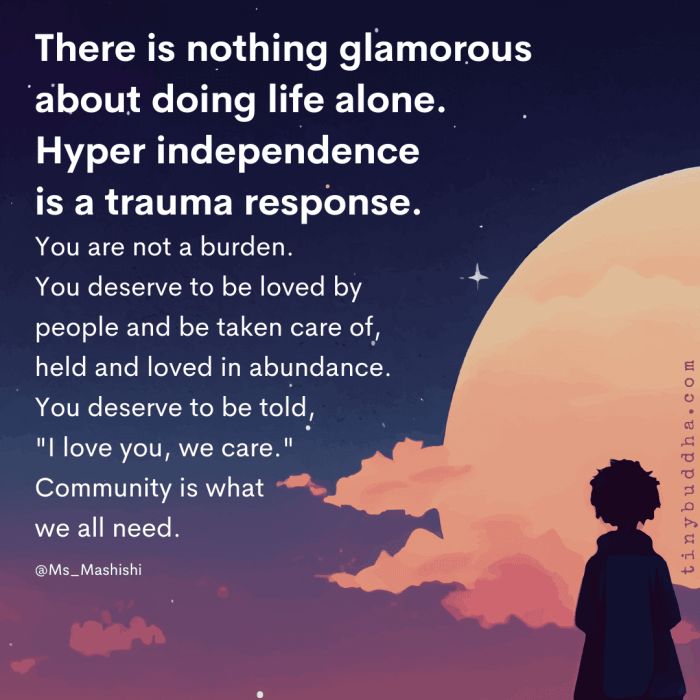
Source: tinybuddha.com
Long before the concept of self-reliance enters a person’s vocabulary, the architectural framework of early life often lays down an unyielding foundation of forced maturity. In households where emotional safety is a scarce commodity, young minds rapidly recalibrate their expectations of care, trading the natural vulnerability of childhood for an armor of absolute self-sufficiency. This transformation does not happen by choice; it is a calculated adaptation to unstable environments where survival depends on anticipating needs and managing crises long before the cognitive capacity to process them is fully formed.
Developmental psychology demonstrates that when primary caregivers are chronically absent, overwhelmed, or emotionally volatile, children undergo a process known as parentification. In these dysfunctional family dynamics, the natural hierarchy of care reverses entirely. The developing brain registers the chaos and immediately bridges the gap by assuming responsibilities meant for adults. This premature autonomy fundamentally alters neurobiological pathways, wiring the nervous system for constant threat detection.
Consequently, these individuals learn to suppress their own distress signals because acknowledging pain interferes with the primary directive of keeping the domestic ecosystem afloat. What looks like remarkable composure to the outside world is actually a profound survival strategy born out of sheer necessity.
Triggers of hypervigilance and fierce independence in early life
Childhood environments characterized by instability demand constant vigilance, searing specific survival reflexes into the developing psyche. The following events act as primary catalysts for the development of entrenched hypervigilance and absolute self-reliance:
- Chronic parental emotional unavailability forces children to internalize their struggles, learning early on that seeking comfort only leads to deeper disappointment.
- The sudden assumption of household management duties, such as cooking meals and caring for younger siblings, strips away unstructured play and replaces it with relentless accountability.
- Witnessing frequent domestic volatility trains the young nervous system to constantly scan the room for micro-expressions and shifts in tone to predict the next crisis.
- Serving as the emotional mediator or confidant for distressed adults burdens a developing mind with adult sorrows, effectively stealing the carefree nature of youth.
- Navigating medical or financial emergencies without adult guidance teaches the child that vulnerability is dangerous and that safety can only be secured through absolute control.
Visual documentation of domestic management without assistance
A dimly lit kitchen in the late afternoon hours serves as the silent stage for a profound domestic choreography. A ten-year-old girl stands on her tiptoes before a steaming stove, expertly balancing the regulation of heat beneath a pot of rice while simultaneously soothing a crying toddler strapped to her chest with a makeshift fabric wrap. Her movements are precise, devoid of the hesitation or clumsy wandering typical of her age group.
Dust motes dance in the slanting sunlight cutting through grease-smudged windowpanes, illuminating a room where every item—from the meticulously aligned shoes by the doorway to the homework papers piled neatly beside unpaid utility bills—reflects a desperate attempt to impose order on external chaos. There are no tears, no sighs of frustration, and no calls for help directed toward the empty hallway.
The silence in the room is heavy, punctuated only by the bubbling of the pot and the rhythmic patting of a tiny back, painting a vivid portrait of solitude disguised as capability.
Societal misinterpretation of neglected maturity
Cultural narratives frequently romanticize this early onset of responsibility, mistakenly laundering neglect through the vocabulary of praise and admiration. When society labels a child as remarkably mature, wise beyond her years, or an old soul, it often obscures the underlying systemic failure that forced that child to grow up overnight. Developmental researchers note that educational institutions and community structures regularly reward these hyper-independent behaviors because they make the child low-maintenance and compliant.
Teachers and neighbors admire the quiet girl who never complains, completes her work flawlessly, and manages her own crises without realizing that her silence is a trauma response. This dangerous societal endorsement reinforces the internal belief that love and validation are exclusively earned through utility and perfection. By framing profound neglect as an admirable character trait, the surrounding culture colludes in perpetuating the isolation, leaving the individual to carry the invisible weight of a stolen childhood while being applauded for the very armor that is slowly exhausting her spirit.
True independence born from childhood survival is not a badge of honor; it is a shield forged in the fires of loneliness, guarding a heart that never learned it was safe to rest.
Modern professional environments heavily reward the fierce lone wolf archetype while secretly punishing communal collaboration.

Source: sandstonecare.com
Standing tall in sheer self-reliance often means carrying every heavy burden alone, yet true executive evolution arrives when powerful innovators embrace the leadership tool of the week 2026 ai coaching to strategically share the weight, proving that stepping into visionary mastery still allows the fiercely independent woman to conquer new horizons.
The contemporary corporate landscape operates on a subtle paradox, championing teamwork in its mission statements while aggressively promoting individual supremacy in practice. High-performing women quickly learn that survival often depends on absolute self-reliance, transforming the workplace into a silent arena of endurance.
Corporate advancement strategies fundamentally reinforce the refusal to delegate tasks by tying promotions, individual bonuses, and public accolades exclusively to personal output rather than team cultivation. When performance reviews measure a leader’s value by how many fires they extinguish alone, asking for help is dangerously reinterpreted as professional incompetence. Organizations frequently establish promotion metrics that penalize collaborative bottlenecks, forcing ambitious professionals to hoard responsibilities to guarantee visibility and control over project outcomes.
According to workplace psychology data from organizations like Gallup, chronic individualistic pressure leads directly to exhaustion, because employees believe that relinquishing control exposes them to professional vulnerability. This systemic architectural flaw creates an environment where women cultivate a defensive isolation, believing that sharing the burden signals a fatal lack of leadership capacity.
Comparative Metrics of Workplace Independence and Teamwork
Evaluating the true cost of hyper-independence requires examining how solitary operation contrasts sharply with sustainable communal engagement across critical organizational health indicators.
| Metric | Toxic Workplace Independence | Healthy Professional Teamwork | Organizational Impact |
|---|---|---|---|
| Productivity | Initial high output followed by severe bottlenecks and project delays due to single-point-of-failure syndrome. | Consistent, scalable output driven by distributed workloads and specialized task allocation. | Transitioning from fragile sprint cycles to resilient, long-term operational velocity. |
| Burnout | Extreme exhaustion, chronic stress, emotional detachment, and high incidences of sudden departure. | Balanced energy distribution, peer support systems, and sustainable working rhythms. | Substantial reduction in absenteeism and preservation of institutional knowledge. |
| Retention | Attrition spikes as top talent exhausts themselves trying to maintain impossible, solitary standards. | Stronger organizational loyalty fostered by psychological safety and shared ownership of success. | Stabilized workforce demographics with higher concentrations of seasoned internal leadership. |
| Creativity | Stagnant innovation resulting from echo-chamber decision-making and fear of exposing vulnerabilities. | Diverse problem-solving, cross-pollination of ideas, and robust brainstorming dynamics. | Elevated market adaptability and superior product development outcomes. |
Corporate Leadership Strategies for Dismantling Individualistic Pressures
Dismantling deeply ingrained systemic individualism demands deliberate structural interventions from executive leadership to redefine how professional value is measured and rewarded.
- Redesigning compensation models to reward cross-functional mentorship and collaborative milestones rather than isolated heroics.
- Implementing mandatory delegation audits that track how effectively managers distribute high-impact tasks to team members.
- Establishing psychological safety frameworks that publicly celebrate transparent communication about capacity limits and professional vulnerability.
- Training middle management to recognize the early behavioral signs of hyper-independence before they manifest as critical employee burnout.
True professional strength is measured not by how much weight an individual can carry in silence, but by the sustainable systems they build to lift others.
Anatomy of Isolated Executive Exhaustion
The mahogany door clicks shut, sealing off the sprawling corner office from the bustling floor below, plunging the executive into a suffocating silence. Sunlight streams through floor-to-ceiling glass, illuminating the immaculate, minimalist desk piled high with quarterly reports and unread notifications. She sinks heavily against the locked wooden door, her designer heels kicking off instinctively as the carefully maintained corporate armor finally shatters.
Tremors wrack her frame as suppressed tears spill over cheeks, the silent sobs muffled by the heavy fabric of her tailored blazer to prevent anyone in the hallway from hearing. This daily ritual of private breakdown happens because the corporate ladder demands an unyielding façade of perfection, leaving no room for human frailty. Every email answered at midnight and every crisis managed without a single complaint has built a gilded cage of her own making, where asking for assistance feels like signing her own demotion.
Staring at the polished floorboards, she gathers her breath, wiping away the evidence of despair, preparing to unlock the door and face the boardroom with an impassive smile.
Romantic intimacy feels like a dangerous trap to someone accustomed to controlling every variable of her existence.

Source: aconsciousrethink.com
Stepping into the realm of romantic partnership requires a dismantling of armor that has taken decades to forge, transforming self-preservation into a perceived threat. For the woman who has mastered the art of sovereign survival, the surrender demanded by deep affection registers in the nervous system not as comfort, but as a catastrophic loss of control.
When an individual operates as her own sole provider, protector, and emotional anchor, every outcome in her environment is meticulously calculated and managed. Introducing another human being into this carefully calibrated ecosystem means inviting unpredictability, where variables cannot be anticipated or neutralized. Intimacy demands vulnerability, which inherently strips away the protective insulation of hyper-independence. The panic response is rooted in a conditioned survival mechanism: if reliance on others historically led to disappointment or peril, then depending on a romantic partner today feels functionally identical to stepping onto a ledge without a safety harness.
Psychological triggers of mutual dependence in self-governing partners
Attachment theory and neurological research consistently demonstrate that individuals with high self-reliance histories experience activation of the amygdala—the brain’s threat-detection center—when faced with reciprocity. Mutual dependence shatters the illusion of absolute control, forcing the autonomous partner to confront buried fears of abandonment and inadequacy. Psychological studies on counter-dependency reveal that when a partner offers unsolicited help or emotional anchoring, the fiercely self-governing mind misinterprets this gesture as an attempt at entrapment or a precursor to control.
Consequently, the physiological reaction mirrors acute stress: heart rate spikes, cortisol floods the bloodstream, and an urgent impulse to flee or push the benefactor away takes over. This panic is a desperate bid by the psyche to re-establish dominion over an internal landscape that suddenly feels dangerously permeable.
Subtle sabotage mechanisms deployed against genuine care
Defensive distancing rarely manifests as explosive arguments; instead, it operates through sophisticated, quiet micro-rejections designed to maintain emotional distance. These behavioral patterns ensure the partner remains at arm’s length while preserving the illusion that the independent person is simply busy or low-maintenance. Psychological profiling of guarded individuals highlights specific tactics utilized to neutralize prospective intimacy before it deepens.
- Deploying preemptive criticism to find minor flaws in the partner, thereby justifying a mental retreat from the connection.
- Fictionalizing overwhelming schedules or insurmountable professional crises to deliberately starve the relationship of quality time.
- Minimizing affectionate gestures or gifts with cynical commentary, stripping the romantic overture of its emotional weight.
- Withholding vulnerability by maintaining a strictly logistical, transactional dynamic where deep emotional exchanges are systematically blocked.
Procedural pathway for accepting acts of service from a lover
Dismantling a lifelong fortress cannot happen overnight; it requires a deliberate, methodical retraining of the nervous system to accept support without feeling indebted or compromised. Transitioning from defensive isolation to receiving care is a courageous exercise in relinquishing absolute authority over one’s daily existence. The following structured progression Artikels the necessary phases for lowering the drawbridge safely.
- Acknowledge the physical sensation of panic when help is offered, naming the discomfort mentally instead of reacting by rejecting the assistance immediately.
- Begin with micro-surrender by allowing a partner to handle trivial logistical tasks, such as carrying a bag or opening a door, without intervening or micromanaging how it is done.
- Verbalize gratitude explicitly for the act rather than the utility, shifting the internal narrative from a transaction of debt to a celebration of connection.
- Practice tolerating the discomfort of stillness while a partner actively provides care, resisting the compulsive urge to immediately reciprocate or balance the scales.
Sensory landscape of an earth shattering concession of power
The transition from solitary sovereignty to shared tenderness is captured in a cinematic, highly tactile moment within the quiet perimeter of a dimly lit apartment as midnight approaches. The ambient sounds of the city hum distantly outside the window, while inside, the air carries the earthy, botanical scent of loose-leaf chamomile and boiling water. A prospective partner moves quietly across the hardwood floor, holding a ceramic mug that radiates warmth through glazed clay—a simple, unpretentious offering born entirely of attentiveness.
For the woman watching this unfold from the edge of the sofa, the physical act of sitting entirely still while someone else brews a beverage becomes an overwhelming monument of vulnerability. Every instinct forged through years of self-reliance screams at her to stand up, take over the kitchen, and manage her own needs, framing this tiny gesture as a total surrender of her autonomy.
As she reaches out, her fingertips brushing against the warm ceramic held in another’s hands, the realization strikes with seismic force: letting someone else take care of her is not a defeat, but the terrifying, beautiful birth of a shared world.
“To let someone tend to your wounds is to admit that you were never meant to carry the weight of the world entirely alone.”
Society constantly praises the unyielding self sufficiency of solitary females while ignoring the quiet despair lurking beneath the surface.
Cultural observers and sociologists have long documented how modern civilization constructs pedestals for those who endure adversity in total isolation. Media narratives frequently highlight the solitary figure who conquers professional and personal obstacles without a single ally, framing this extreme isolation as an admirable personal triumph. Beneath this polished veneer of effortless capability, however, lies a pervasive systemic blind spot that routinely minimizes the chronic exhaustion and emotional depletion experienced by those who refuse to share their burdens.
Public adulation acts as a powerful reinforcement mechanism, convincing individuals that asking for help signals a lack of competence or emotional resilience. When society equates autonomy with moral superiority, it inadvertently creates an environment where admitting vulnerability carries a severe social and psychological penalty. Consequently, millions of capable individuals suffer in silence, trapped behind a facade of relentless productivity.
Cultural Conditioning Surrounding Assistance
The historical and sociological roots of extreme independence run deep within contemporary economic and social frameworks. From an early age, individuals—particularly women—absorb the subtle yet pervasive message that relying on others introduces unacceptable risk and vulnerability. Cultural institutions, from educational systems to corporate ladders, systematically reward those who minimize their reliance on collective support networks. This conditioning frames the simple act of requesting assistance not as a normal facet of human cooperation, but as a catastrophic moral failure and a shameful surrender of personal agency.
Psychological research indicates that this systemic pressure cultivates an internalized belief system where self-reliance is tied directly to human worth. When an individual stumbles while carrying an unmanageable load, the cultural narrative often blames personal weakness rather than the unrealistic demands of the structure itself. This relentless conditioning forces people to suppress their physical and emotional limits, fearing that any display of neediness will invite judgment, rejection, or professional obsolescence.
Over time, the fear of being perceived as incapable overrides the fundamental human biological necessity for communal care, resulting in profound psychological distress that remains entirely hidden from public view.
Comparative Analysis of Public Perception and Private Reality
The disparity between external acclaim and internal well-being reveals a stark dichotomy in how hyper-independent lives unfold across physical, psychological, and relational dimensions. The following breakdown illustrates the profound contrasts hidden behind the mask of effortless self-sufficiency.
| Evaluation Domain | Public Praise and Perception | Internal Reality and Experience | Physical Health Impacts | Relational Depth |
|---|---|---|---|---|
| Professional Sphere | Celebrated as a visionary leader who needs no supervision or collaborative safety net. | Suffering from chronic burnout, imposter syndrome, and pervasive anxiety about failure. | Elevated cortisol levels, sleep deprivation, and stress-induced somatic disorders. | Superficial professional networks built on transactional utility rather than genuine trust. |
| Personal Sphere | Viewed as an emotionally bulletproof anchor who effortlessly manages all domestic demands. | Experiencing deep loneliness, alienation, and a perpetual fear of being a burden. | Weakened immune function and chronic fatigue due to hyper-vigilance. | Strained or distant personal relationships characterized by emotional unavailability. |
Deconstruction of the Toxic Superwoman Narrative
Media representations routinely manufacture an idealized archetype of the modern individual who balances career, family, and personal crises with a serene smile and zero outside intervention. This harmful mythology misrepresents human psychology by promoting endurance as the ultimate virtue while ignoring the severe systemic costs of isolation. Deconstructing this cultural trope requires acknowledging that human survival has always depended on interdependence, mutual aid, and shared labor rather than solitary endurance.
True strength is found not in the ability to carry everything alone, but in the wisdom to build and trust a community that shares the weight.
Self-reliance often crowns her days, yet deep bonds quietly anchor her swift ascent through life. Reports confirm that carving out shared moments via mother daughter holiday ideas bridges old divides under sunlit skies. This deliberate pause empowers the fiercely autonomous soul, proving that accepting gentle guidance enhances ultimate personal sovereignty and lifelong emotional strength.
Challenging these pervasive cultural standards involves dismantling the romanticization of exhaustion and redefining success through the lens of holistic well-being. When media outlets stop glorifying burnout as dedication, individuals gain the cultural permission to embrace vulnerability and accept support. Moving beyond this toxic paradigm requires active resistance against the societal expectation that perfection must be maintained at the absolute expense of mental and physical health.
Visual Metaphor of Overburdened Solitude
Envision a bustling metropolitan avenue during the height of the morning rush hour, a chaotic sea of rushing commuters, blaring horns, and moving traffic. Amidst this relentless urban tide walks a single woman balancing towering, precarious stacks of invisible packages piled high upon her shoulders and arms. Each package represents a hidden responsibility—unspoken emotional labor, professional demands, family obligations, and personal crises—stacked so high that they obscure her vision of the horizon.
She moves with rigid, mechanical precision, her muscles trembling under the invisible strain, acutely aware that a single misstep will send the entire fragile tower crashing to the pavement. Pedestrians rush past her, offering admiring glances at her seemingly effortless composure, completely blind to the silent panic in her eyes and the agonizing physical toll required to keep every single item from falling.
Relearning the lost art of leaning on another human being requires dismantling decades of defensive armor piece by painful piece.
The journey away from radical isolation begins in the quiet consulting rooms of psychological healing centers, where chronic self-reliance is recognized not as a badge of honor, but as a complex survival mechanism forged in early life. For individuals who have spent decades managing every crisis without backup, the transition toward healthy interdependence resembles a delicate surgical procedure. This process demands a deliberate unwinding of the nervous system, teaching a hyper-vigilant mind that sharing space, responsibilities, and emotional weight no longer poses an existential threat to personal survival and autonomy.
Embracing interdependence safely requires a structured therapeutic roadmap that honors the deep-seated fears of vulnerability while gently introducing the transformative power of genuine human reciprocity. Clinical psychologists often guide clients through a gradual exposure framework, starting with somatic awareness to help the body recognize the difference between actual danger and the mere discomfort of needing someone else. Patients learn to identify their core relational fears—such as dreading burdening others or anticipating abandonment—and reframe these anxieties as echoes of past conditioning rather than accurate predictions of current adult relationships.
By establishing firm personal boundaries alongside an open heart, individuals discover that leaning on a partner or friend does not require relinquishing sovereignty, but rather expands their capacity for joy and mutual support.
Therapeutic roadmap for embracing interdependence without feeling suffocated or weak
Navigating the shift from absolute isolation to collaborative living involves systematically challenging the internal narratives that equate needing help with personal failure. Clinical milestones in this transition focus on expanding the tolerance for emotional exposure through consistent, measured steps. The therapeutic framework prioritizes nervous system regulation, ensuring that the body learns to interpret closeness as a restorative sanctuary rather than a psychological trap.
As individuals progress through this psychological restructuring, they learn to articulate their needs with clarity rather than dropping subtle hints or defaulting to silent resentment. Therapists encourage the practice of micro-surrendering control in low-stakes environments, allowing trusted confidants to make minor decisions regarding social outings, meal planning, or domestic organization. This controlled exposure helps rewire the brain’s threat-detection circuitry, proving that dependence can coexist harmoniously with personal agency and mutual respect.
Practical exercises for practicing daily vulnerabilities
Integrating interdependence into a previously solitary life requires concrete, actionable steps that bridge the gap between theoretical healing and daily reality. Consistent practice with low-risk scenarios builds the emotional stamina needed for deeper relational commitments. The following inventory Artikels specific daily habits designed to gently fracture the fortress of hyper-independence without overwhelming the nervous system.
- Requesting a minor favor from a neighbor, such as borrowing a cup of sugar or collecting mail during a brief absence, to normalize the exchange of everyday assistance.
- Allowing a professional colleague to take the lead on a final slide presentation or project summary without stepping in to micromanage their delivery or formatting.
- Admitting to a close friend when feeling overwhelmed by daily responsibilities instead of reflexively claiming that everything is completely under control.
- Accepting a direct compliment without immediately deflecting it, minimizing the achievement, or offering a reciprocal praise as a transactional shield.
- Delegating a household chore to a partner or roommate and resisting the urge to redo the task afterward to match rigid personal standards.
True strength is not measured by the weight one can carry in total isolation, but by the grace with which one opens their hands to accept support.
Physical sensations of releasing chronic muscular tension
Decades of maintaining a defensive posture leave an unmistakable imprint on the physical body, locking the muscular system into a perpetual state of high alert. When an individual finally permits themselves to lean into a safe, reliable embrace, a profound somatic shift occurs throughout the entire physiological framework. The shoulders, which typically hover near the ears as a protective armor against unseen threats, begin a slow, involuntary descent.
The jaw unclenches, releasing a lifetime of unspoken frustrations and tightly guarded boundaries.
Upon surrendering control within a secure physical connection, the breath deepens from shallow, rapid thoracic movements into expansive, diaphragmatic respiration that reaches the lower abdomen. The nervous system transitions rapidly from sympathetic fight-or-flight activation into parasympathetic rest-and-digest recovery. This physiological softening often brings an unexpected wave of emotional release, sometimes manifesting as sudden tears, as the body recognizes the immense fatigue of carrying the world entirely alone and finally grants itself permission to put the heavy burden down.
Emotional milestones achieved during the first year of unlearning radical self-reliance, Hyper independent woman
The first twelve months of dismantling lifelong self-sufficiency are marked by profound psychological shifts, alternating between exhilarating breakthroughs and sudden, protective retreats. Tracking these emotional milestones provides a reassuring roadmap for individuals navigating the unfamiliar territory of shared emotional labor and mutual trust. Each achieved marker signifies a permanent rewiring of relational patterns and a deeper acceptance of communal humanity.
- Month three brings the initial recognition of reflexive isolation, where the individual catches themselves mid-sentence rejecting help and consciously chooses to accept assistance instead.
- Month six introduces the capacity to sit comfortably with the temporary discomfort of vulnerability without immediately fleeing the situation or manufacturing a crisis to regain control.
- Month nine features the first instance of seeking emotional comfort during a crisis rather than retreating into silence, experiencing the profound relief of being genuinely understood and supported.
- Month twelve culminates in the realization that interdependence has not diminished personal power, but has instead enriched daily life with authentic connection, shared laughter, and sustainable emotional resilience.
Outcome Summary
Unlearning a lifetime of radical self-reliance is certainly no small feat, requiring immense courage to trade the cold comfort of solitude for the warm, unpredictable embrace of shared humanity. As these resilient souls take those first tender steps toward mutual dependence, they unlock a profound capacity for authentic intimacy and lasting peace. Letting others share the weight does not diminish strength; rather, it transforms isolated survival into a vibrant, deeply connected journey of shared triumph and enduring hope.
