How to trust your partner again requires a delicate journey through the quiet corridors of a shattered heart, where invisible fractures alter the landscape of shared tomorrows. When the foundational bedrock of a committed relationship suffers a profound breach, the nervous system registers a severe shock, plunging the betrayed individual into an overwhelming state of emotional turbulence.
Like light filtering through a fractured stained glass window, internal fragmentation scatters our perception of safety into sharp, jagged pieces. Acknowledging this profound grief becomes the crucial first step toward reclamation, allowing us to quiet the relentless ghosts of suspicion and build a sturdy, authentic path forward.
Rebuilding a shattered bond begins when you silently acknowledge the invisible gravity of the betrayal that fractured your shared foundation.
The discovery of a profound deception strikes the human psyche with the force of an acute traumatic event, fundamentally altering a person’s perception of reality. When a committed partnership experiences a catastrophic breach of trust, the foundational schemas we rely upon to navigate intimacy are instantly dismantled. Psychological research indicates that discovering infidelity or severe dishonesty triggers symptoms closely mirroring acute stress disorder and post-traumatic stress.
The brain’s amygdala hijacks the emotional processing centers, plunging the individual into a state of hypervigilance where safety becomes an abstract, unattainable concept. This profound shock registers in the body as a physical threat, initiating a cascade of stress hormones that impair cognitive function, disrupt sleep architecture, and erode emotional regulation. The stark realization that the shared narrative of the past was built upon hidden falsehoods forces the mind into a grueling cognitive dissonance, attempting to reconcile the person who inflicted the harm with the cherished partner of memory.
The Psychological Spectrum of Betrayal Trauma
Navigating the immediate aftermath of a relational rupture requires understanding the distinct internal phases that characterize the trauma response. The emotional turbulence fluctuates wildly between cognitive paralysis, defensive rejection of reality, and volatile surges of indignation. Examining these overlapping states helps demystify the chaotic internal landscape experienced by the betrayed individual.
| Psychological Shock | Defensive Denial | Volatile Anger |
|---|---|---|
| Characterized by emotional numbness, cognitive fog, a sense of unreality, and the inability to process daily operational tasks. | Operating as a subconscious self-preservation mechanism, the mind temporarily blocks the full magnitude of the truth to prevent immediate psychological collapse. | Surges of intense fury directed at the injustice, accompanied by intrusive thoughts, a desperate need for absolute accountability, and righteous indignation. |
The Architecture of Internal Fragmentation
Envision a magnificent, centuries-old stained glass window that once cast vibrant, harmonious colors across a quiet cathedral floor, now subjected to a sudden, devastating impact. The glass does not merely shatter; it fractures along millions of microscopic fault lines, transforming a singular, cohesive masterpiece into a jagged mosaic of disconnected shards. Each independent piece reflects light differently, distorting every familiar shape and casting sharp, fractured shadows across the interior space.
The heavy lead cames holding the structure together are warped beyond recognition, rendering the entire assembly fragile and vulnerable to the slightest draft. This intricate lattice serves as a precise analog for the human heart following a profound deception, where every memory is retroactively re-examined through a distorted lens, and the structural integrity of the self feels irreparably compromised by the jagged edges of reality.
The Pathway of Internal Validation
True recovery cannot commence while the injured party attempts to rush the process to appease the person who caused the harm. Acknowledging the depth of one’s own sorrow is a vital prerequisite for healing, demanding patience and deliberate self-compassion before any external reconciliation can be contemplated.
- Stop minimizing the emotional impact of the event to keep the peace, and instead permit yourself to experience the full spectrum of grief without self-judgment or artificial timelines.
- Establish firm boundaries regarding your emotional bandwidth, recognizing that your primary responsibility is stabilizing your own nervous system rather than managing the guilt of your partner.
- Document your internal state through journaling or private reflection to anchor your reality, counteracting any lingering gaslighting or minimization of the breach.
- Surround yourself with objective, safe external perspectives that affirm your emotional reality, ensuring you do not process the trauma in absolute isolation.
Healing from betrayal is not a linear return to the past, but the courageous construction of a resilient new reality built upon radical honesty and self-preservation.
Shifting away from constant interrogation requires learning how to sit quietly beside the uncomfortable ghost of suspicion without feeding its appetite.

Source: verywellmind.com
Recovering from a severe breach of trust often traps the mind in a relentless loop of investigation and hyper-vigilance, making peace feel perpetually out of reach. When the foundation of a relationship crumbles, the brain naturally responds by treating the domestic environment like a high-threat zone where danger could lurk behind any closed door. True progress demands moving past the compulsive need for endless questioning, choosing instead to tolerate the heavy silence of uncertainty without letting panic dictate the next move.
From a neurobiological standpoint, the human brain is hardwired to seek absolute certainty, especially when faced with unpredictable trauma. Deep within the limbic system, the amygdala fires rapid distress signals whenever a gap in information appears, perceiving the unknown as a direct threat to survival. Constant surveillance—such as checking text histories, demanding minute-by-minute itineraries, or testing a partner’s loyalty—offers a temporary dopamine-driven hit of relief, tricking the nervous system into believing control has been regained.
However, this investigative cycle actually reinforces neural pathways of anxiety. Each time an interrogation takes place, the brain confirms the premise that danger is everywhere, ultimately stalling emotional healing by keeping the stress response permanently activated and preventing the prefrontal cortex from doing the deep work of relational repair.
Designing a daily reflection ritual that redirects obsessive mental replays into productive self-soothing behaviors
Transforming obsessive mental replays requires structured physical and mental boundaries that channel anxious energy away from the partner and back into personal grounding. Establishing a predictable daily containment ritual teaches the nervous system that distress can be processed safely without demanding immediate external reassurance.
Picture a dedicated twilight journaling session set in a quiet, dimly lit corner of the room, accompanied by the tactile sensation of heavy linen paper and the steady warmth of a ceramic mug. During this designated twenty-minute window, intrusive thoughts and suspicions are invited onto the page in unedited, raw ink, giving the phantom fears a physical form outside the mind.
Once the timer rings, the journal is physically closed, slid into a drawer, and locked away, symbolizing the closure of the investigation. The transition outward is marked by an immediate physiological shift, such as stepping onto a yoga mat for intentional stretching or engaging in rhythmic breathwork, which signals to the body that the threat watch has officially ended for the day.
Procedures for noticing the onset of a mental spiral and grounding the nervous system in the present room
Recognizing the microscopic beginnings of an internal panic loop prevents minor sensory triggers from escalating into full-scale emotional interrogations. Implementing a reliable tactical grounding routine helps anchor erratic thoughts back into the safety of the current physical environment.
Rebuilding faith in a relationship after a breach feels like navigating a dense, fog-laden forest, where every shadow whispers doubt and hesitation. Often, persistent emotional turbulence stems from deeper mental health realities, prompting many to ask is generalized anxiety disorder a disability when daily peace shatters. By addressing these inner struggles head-on, couples illuminate a promising path toward profound healing, turning lingering fear into resilient, unbreakable shared devotion.
- Scan the body immediately upon noticing a tightening in the chest or a racing pulse, acknowledging the physical sensation without attaching a catastrophic narrative to it.
- Name five distinct objects visible in the immediate room, focusing intently on their physical textures, colors, and unique shapes to force the brain out of abstract worry.
- Inhale deeply through the nose for a count of four, hold the breath for four, and exhale slowly through pursed lips for a count of six to manually down-regulate the vagus nerve.
- Press both feet firmly against the floorboards, sensing the immovable support of the earth beneath the chair or bed to reinforce the reality of physical safety.
- Whisper a factual statement out loud to break the internal monologue, such as noting the exact time of day and confirming that no active threat is present in the space.
Separation of genuine safety concerns from phantom anxieties generated by past historical wounds
Navigating the aftermath of betrayal means untangling valid intuitive warnings from the deafening static of historical trauma. Real-time safety concerns are typically rooted in observable, current behavioral shifts—such as sudden, unexplained secretive habits paired with profound emotional withdrawal. Conversely, phantom anxieties are ghosts of the past, projecting yesterday’s devastating pain onto today’s entirely innocent interactions and normal routines. Recognizing this difference requires brutal honesty and careful observation.
True discernment acknowledges that while the scar tissue of historical wounds is deeply sensitive, it must never be allowed to fabricate current evidence where none exists.
For instance, clinical relationship data shows that partners recovering from infidelity frequently experience acute phantom triggers during routine business travel, confusing normal professional obligations with historical betrayal patterns. When a partner leaves for a standard conference, the traumatized brain often screams that history is repeating itself, despite a complete lack of suspicious indicators. Discerning the difference involves checking the facts of the present moment against empirical reality rather than emotional memory.
By pausing to ask whether the alarm bells are ringing because of a present-day action or because of a past scar, individuals can honor their protective instincts without unfairly penalizing a partner who is actively working to rebuild trust.
Witnessing true accountability demands observing how your partner behaves when no one else is grading their emotional homework.
Rebuilding a fractured relationship requires looking past public performances and examining the quiet, unscripted moments of daily interaction. True accountability thrives in the absence of an audience, revealing whether transformation is deeply rooted or merely performed for convenience.
The landscape of emotional recovery shifts dramatically when a partner moves away from defensive reactions and steps into the realm of radical, unconditional ownership. A defensive apology often sounds polished, functioning as a linguistic shield designed to minimize fallout, protect ego, and rush the healing process. These hurried expressions of regret typically feature subtle qualifiers, shifting the spotlight onto external stresses or even subtly blaming the person who was hurt.
Conversely, radical ownership operates without an escape hatch or expiration date. It demands that an individual stares unflinchingly at the wreckage of their past destructive choices without demanding applause for their honesty. When someone practices unconditional ownership, they stop managing the optics of their wrongdoing and start shouldering the heavy, unglamorous labor of psychological reconstruction. They accept the full weight of the consequences, acknowledging that trust cannot be negotiated back into existence through clever arguments or appeals to time passed.
This profound shift means they listen to the echoes of their betrayal without interrupting, sighing, or rolling their eyes, recognizing that emotional safety is fragile terrain requiring infinite patience and humility.
Radical accountability is not a performance delivered for praise; it is the quiet, daily practice of holding oneself completely responsible for the wounds one inflicted.
Behavioral indicators of relational restoration
Navigating the terrain of emotional repair requires objective benchmarks to distinguish between temporary compliance and deep-seated behavioral evolution. The following structured matrix Artikels the specific operational markers that separate authentic rehabilitation from superficial damage control during the recovery process.
| Active Listening Behaviors | Defensiveness Red Flags | Consistency Markers | Transparency Gestures |
|---|---|---|---|
| Maintaining open posture and steady eye contact while absorbing criticism | Interrupting to correct minor details or timelines of past events | Following through on minor daily commitments without needing reminders | Proactively offering access to schedules, locations, and communications |
| Paraphrasing the partner’s emotional pain accurately before responding | Weaponizing past mistakes of the hurt partner to deflect blame | Maintaining emotional equilibrium during unexpected stress or conflict | Volunteering context regarding triggers or difficult internal struggles |
| Validating unspoken fears without dismissing them as paranoia | Playing the victim role and demanding comfort for experiencing guilt | Predictable daily patterns that align with verbal assurances given | Eliminating secretive habits around digital devices and personal space |
Observational portrait of a quiet evening processing resentment
The amber glow of a single floor lamp cuts through the shadows of a modest living room, casting long silhouettes across hardwood floors where the air feels thick with unspoken history. Seated on opposite ends of a worn linen sofa, one partner leans forward, hands trembling slightly as they articulate a wave of raw, jagged resentment that has festered for months.
Every word carries the weight of a reopened wound, yet the atmosphere remains remarkably steady because the listener refuses to flinch, interrupt, or construct mental counterarguments. There are no dramatic sighs, no defensive posture adjustments, and no hurried attempts to fix the narrative or rush toward a premature resolution. Instead, the listener absorbs the verbal storm with grounded stillness, nodding slowly to validate the legitimacy of the anger filling the room.
Rebuilding faith requires deliberate patience and vulnerable dialogue after betrayal shatters a bond. Picture yourselves escaping to cozy cabins with hot tubs nestled deep within whispering pines, where rising steam melts away old resentments and quiet evenings invite deep healing. Embracing this serene sanctuary allows profound emotional renewal, ultimately guiding two hearts back toward unbreakable mutual trust.
When the voice recounting the hurt finally trails off into a heavy silence, the listener reaches out a cautious hand, waiting for permission before offering a calm, unvarnished validation of the pain caused. This unscripted scene captures the essence of emotional safety, proving that healing advances not through grand declarations, but through the quiet, grueling stamina required to sit beside the ghost of a broken promise without running away.
Long-term behavioral metrics for evaluating genuine remorse, How to trust your partner again
Lasting reconciliation is never proven by sweeping romantic gestures, expensive gifts, or tearful proclamations made in moments of high emotional drama. These theatrical displays often serve as emotional sugar rushes, providing a temporary high that masks a lack of foundational stability. Measuring genuine remorse requires observing how a partner handles the mundane, unglamorous stretches of life when no crises demand urgent attention.
True reform shows up in the quiet accumulation of micro-choices made over months and years. It is reflected in the steady predictability of a partner who honors boundaries, responds to vulnerability with tenderness instead of irritation, and accepts accountability without fatigue. When a person demonstrates remorse through long-term consistency, they stop treating trustworthiness as a project to be completed and start living it as an unalterable personal standard.
Crafting a modern roadmap for emotional safety involves designing intentional boundaries that protect your vulnerable heart while remaining open to connection.
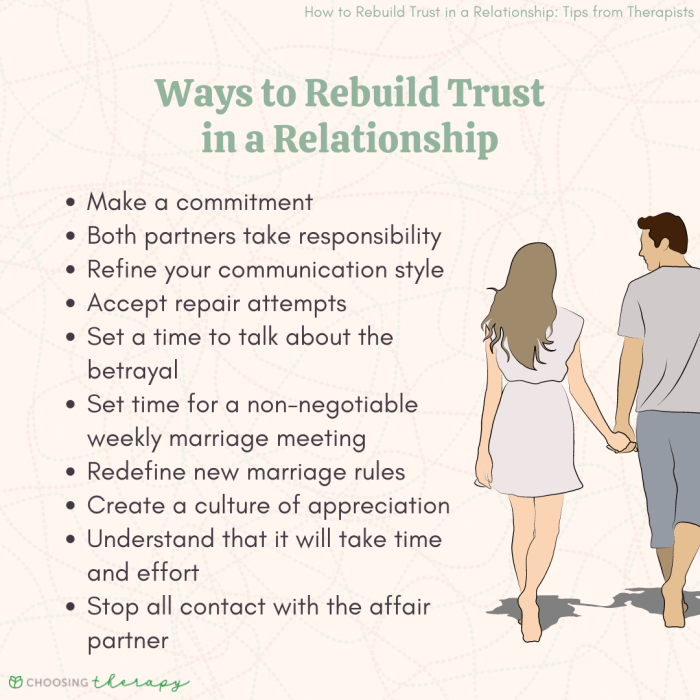
Source: choosingtherapy.com
Reclaiming peace after a profound relational fracture requires moving beyond vague intentions and entering the architectural phase of emotional recovery. When trust evaporates, the natural instinct is to either throw open all the doors in reckless desperation or lock every single window out of paralyzing fear. Neither approach offers sanctuary. Constructing a modern roadmap demands a delicate balance between structural integrity and emotional accessibility, ensuring your inner sanctuary remains secure without turning into an isolated fortress.
Establishing this new baseline means recognizing that boundaries are not weapons designed to punish a repentant partner, nor are they invisible tripwires meant to catch them failing. Instead, they function as clear blueprints that communicate how love, respect, and safety must be practiced inside your shared space moving forward. By visualizing these limits not as concrete barriers, but as flexible glass walls that allow you to see and feel connected while maintaining distinct personal sovereignty, healing finally gains structural support.
The Architecture of Healthy Relational Boundaries
Rebuilding after betrayal involves recognizing that traditional boundary-setting advice often fails because it treats relationships as static entities rather than living, breathing ecosystems. When deep deception occurs, the nervous system enters a chronic state of hypervigilance, interpreting everyday interactions through a lens of extreme threat. Traditional boundaries often manifest as emotional prison walls—impenetrable, rigid structures built to keep pain out, which inadvertently keep love, intimacy, and shared vulnerability out as well.
The architecture of a healthy relational boundary relies on permeability combined with firmness, much like a modern home equipped with reinforced doors and large, clear windows. You decide who enters, under what conditions, and when it is time to close the latch, but you never board up the windows entirely because light and air remain essential for growth.
Designing this functional architecture requires understanding the difference between controlling your partner’s behavior and managing your own exposure to potential harm. A prison wall seeks to lock the other person inside a strict behavioral cage, dictating their movements, thoughts, and digital footprints under the threat of perpetual punishment. Conversely, a healthy boundary focuses entirely on self-governance: defining what you will participate in, what behaviors you will accept, and the exact steps you will take to protect your mental health if those thresholds are crossed.
For instance, demanding absolute access to every text message, email, and GPS coordinate indefinitely creates a dynamic resembling a correctional facility, turning you into a warden and your partner into an inmate. Sustainable healing shifts this dynamic away from surveillance toward transparency freely given and trust gradually earned, supported by clear structural frameworks.
Boundaries are the distance at which I can love you and me simultaneously, without losing either of us in the process.
Enacting this architecture in daily life involves establishing physical, emotional, and temporal parameters that respect both individuals’ psychological recovery rates. It means carving out sacred spaces where discussions about the affair are paused so that both partners can rest, alongside scheduled times where deep emotional processing can occur without distraction. This structural approach prevents emotional exhaustion, allowing both individuals to navigate the labyrinth of recovery with clarity, dignity, and a shared commitment to sustainable relational health.
Unconventional Boundary-Setting Phrases for Deep Healing
Navigating the aftermath of severe deception requires linguistic tools that bypass standard clichés and speak directly to the complexities of rebuilding a fractured bond. Standard communication scripts often fall flat because they sound either too clinical or overly aggressive, triggering immediate defensiveness. Utilizing tailored, unconventional phrases helps articulate your internal reality with precision, offering your partner a clear understanding of your current emotional landscape without inviting unnecessary conflict.
- I am stepping back from this conversation for the next hour to regulate my nervous system, and I will initiate our reconnection when I am grounded.
- Your transparency is valued, but my healing requires me to focus on my internal stability rather than verifying your external whereabouts today.
- This topic touches a raw nerve from the past deception, and I need us to approach it with a softer tone if we are to continue.
- Sharing my vulnerabilities is an act of trust, and I need to know this information will be handled with absolute emotional care.
- I am choosing to sit with my discomfort right now instead of demanding immediate reassurance, but I may need to talk through it later.
Comparative Framework of Relational Safety Dynamics
Distinguishing between true self-protection and counterproductive isolation is vital to preventing the recurrence of toxic relational patterns during the recovery phase. The following structural breakdown contrasts isolation, isolation disguised as boundaries, and genuine self-protection to clarify how different approaches impact emotional recovery.
| Behavioral Metric | Isolation | Isolation Disguised as Boundaries | Genuine Self-Protection |
|---|---|---|---|
| Primary Objective | To completely avoid any possibility of emotional pain or vulnerability. | To control and punish the partner while claiming the moral high ground. | To foster personal safety while keeping channels for connection open. |
| Partner Interaction | Total emotional and physical withdrawal; silent treatment. | Imposing impossible demands and rigid surveillance disguised as rules. | Clear articulation of needs paired with accountable engagement. |
| Long-term Impact | Fosters deep resentment, emotional atrophy, and eventual breakup. | Creates a toxic power struggle and continuous high-conflict cycles. | Supports gradual trust rebuilding, resilience, and mutual respect. |
Communication Strategies for Defusing Defensive Retaliation
Introducing new personal rules into a recovering relationship frequently triggers a fear of rejection or inadequacy in the partner who committed the initial betrayal. When boundaries are stated with blame or harshness, the receiving party often experiences a shame spiral, shifting the focus from the original wrongdoing to the perceived attack on their character. Mastering the delivery of these boundaries requires anchoring your statements in first-person accountability, focusing on your internal experience rather than launching accusations.
This approach lowers the defensive threshold, allowing your partner to hear your request as an invitation to collaborate on safety rather than an indictment of their entire existence.
Framing your newly minted personal rules with empathy and firmness involves acknowledging the difficulty of the process for both sides while refusing to compromise on your baseline requirements for emotional security. Instead of saying you always trigger my anxiety when you stay late, framing the boundary around your personal capacity transforms the dynamic completely. Stating that your nervous system currently requires predictable evening routines to feel secure reframes the boundary as a shared operational goal rather than a personal indictment.
By pairing these statements with validation of any positive efforts your partner is currently making, you cultivate an environment where accountability thrives, defensiveness melts away, and true relational safety can finally take root.
Dismantling the old relationship blueprint paves the way for two entirely different people to inhabit the same shared domestic space.: How To Trust Your Partner Again

Source: shunspirit.com
Every structural collapse carries a definitive message about the hidden structural flaws beneath the surface of daily life. When a foundational betrayal shatters the architecture of an intimate partnership, the instinctual urge is often to gather the fallen debris and reconstruct the exact dwelling that existed prior to the rupture. Yet, returning to the status quo ante bellum is fundamentally an architectural impossibility masquerading as a comforting dream.
The previous framework contained the exact blind spots, unspoken resentments, and structural vulnerabilities that permitted the betrayal to occur in the first place. Trying to force a newly evolved, deeply scarred reality back into the rigid floor plan of a naive past creates an intolerable pressure cooker of recurring anxieties and stagnant expectations.
Attempting to resurrect the exact pre-betrayal dynamic is a flawed objective doomed to repeat history because that former dynamic was inextricably linked to the catastrophe that ended it. Psychologically and emotionally, both individuals are no longer the same people who pledged allegiance under that old banner. One partner carries the heavy, transformative weight of survival and hyper-vigilance, while the other bears the humbling, demanding responsibility of profound remorse and radical restructuring.
When couples try to pretend that the fracture was merely a temporary turbulence rather than a total system failure, they inevitably recreate the same silent corridors, unexpressed boundaries, and emotional complacency. Real estate development principles teach us that you cannot build a skyscraper on a compromised foundation without driving deep pilings into bedrock; similarly, emotional recovery requires abandoning the superficial aesthetics of the past to construct a fundamentally fortified interior life.
Historical patterns in relational psychology demonstrate that denial of structural change acts as a primary catalyst for secondary breaches of trust. When couples bypass the rigorous excavation phase and rush straight to interior decorating, they are simply painting over rotting timber. The ghosts of the old dynamic will inevitably haunt the hallways because the rules of engagement remain dangerously unchanged.
Rebuilding shattered confidence in a relationship requires profound patience and vulnerable dialogue. Investigators of the heart often discover that healing begins when partners ask and answer questions as in the example to clear lingering doubts. Through this deliberate, transparent exchange of truths, broken bonds mend gradually, illuminating a hopeful path forward where mutual devotion truly thrives once more.
Moving forward demands the courageous demolition of the familiar, bidding farewell to the comfortable illusions that fostered negligence, and stepping onto an empty plot of land where an entirely new kind of habitation can be thoughtfully engineered from the ground up.
Collaborative manifesto drafting for a brand-new relational ecosystem
Designing a sustainable future requires intentional architecture rather than passive drifting into old domestic habits. To transition away from the ghost of the past, couples must sit down as co-architects to draft a living document that defines their emerging relational reality. This creative brainstorming exercise replaces silent assumptions with explicit, mutually agreed-upon commitments that govern their shared ecosystem.
Rebuilding shattered trust demands immense courage as old emotional wounds slowly heal under the bright light of honesty. Navigating this delicate healing journey often mirrors what is the difference between internal and external conflict , balancing quiet personal doubts against shared relational hurdles. By addressing these profound layers together, couples can successfully restore unbreakable bonds and step confidently into a brighter tomorrow.
- Establish the foundational axiom of radical transparency, agreeing that hidden information is the primary solvent of intimacy and that all difficult truths must be welcomed over comfortable falsehoods.
- Redefine individual autonomy within the partnership, acknowledging that a healthy ecosystem requires two distinct, thriving roots rather than an enmeshed, codependent entanglement.
- Codify emergency protocols for emotional triggers, detailing specific physical and verbal cues that allow either partner to pause a heated dynamic before it spirals into historical reactivity.
- Artikel shared restorative rituals that explicitly replace outdated holiday or weekend routines tainted by the memory of the fracture.
- Establish a quarterly structural review mechanism where both individuals evaluate the health of the relationship blueprint and propose necessary architectural modifications without fear of defensive retribution.
A truly resilient partnership is not one that avoids storms, but one that deliberately rebuilds its shelter to withstand the winds that previously brought it down.
Unusual vulnerability exercises for practicing mutual transparency in low-stakes everyday scenarios
Rebuilding the muscle of trust cannot happen solely during moments of high-stakes emotional crisis or heavy therapeutic processing. True safety is forged incrementally through the accumulation of micro-moments where vulnerability yields acceptance rather than danger. Integrating deliberate, unusual transparency practices into the mundane rhythms of daily life rewires the nervous system to associate openness with safety.
- The daily emotional inventory exchange, where each partner shares one petty annoyance, one irrational fear, and one moment of genuine gratitude during the morning coffee routine without offering immediate solutions or defensive commentary.
- The blind navigation walk, where partners take turns leading each other blindfolded through a familiar public park or domestic environment for ten minutes, teaching the nervous system the visceral sensation of relying entirely on the other’s vocal guidance and physical steadiness.
- The uncensored thought log reading, where both individuals write down three unfiltered, random thoughts they experienced about each other during the workday and read them aloud verbatim over dinner, normalizing the presence of complex, messy internal monologues.
- The unread message screen-share, where partners voluntarily display their phone’s recent notification drawer for thirty seconds during casual conversation, transforming a historical trigger of suspicion into a boring, uneventful non-event that neutralizes the neurological charge of digital devices.
- The physical anchor hold, where both individuals sit facing each other in silence for five minutes, maintaining unbroken eye contact while holding hands, consciously breathing together to regulate their nervous systems without using words to mask underlying discomfort.
- Execute a physiological reset by anchoring both feet firmly against the floor, identifying three visible blue objects in the immediate environment, and taking four slow, measured breaths that prioritize a prolonged exhalation phase.
- Silence internal panic by mentally acknowledging the physical sensation without judgment, categorizing it strictly as an automated neural echo rather than an indicator of a present-day crisis.
- Step away from active collaborative tasks or public interactions for a mandatory three-minute restroom break to splash cold water on the face, rapidly lowering the heart rate through the mammalian dive reflex.
- Defer all impulse-driven communication with the partner until an appropriate, designated hour of calm reflection arrives, neutralizing the urge to send erratic or accusatory text messages during high-stress working hours.
Descriptive narrative illustrating the concept of growing through shared scar tissue
In the quiet depths of a botanical nursery, a skilled horticulturist approaches two distinct, mature fruit trees—one bearing a history of resilient survival through harsh winters, the other possessing a vibrant, sweet potential yet untested by hardship. With a sharp, precise blade, the master pruner cuts deeply into the bark of both trunks, exposing the tender, living cambium layer beneath the rigid exterior.
By pressing these exposed wounds tightly against one another and wrapping them securely in waxed twine, the gardener initiates an ancient, miraculous process known as grafting. In the weeks that follow, the trees do not pretend the incisions never occurred; rather, they direct their vital sap and nutrients straight toward the site of the injury. As cellular walls multiply and intertwine across the divide, a thick, protective knot of callus tissue forms directly over the union, sealing the vulnerability with a dense, hardened ridge of combined strength.
Over subsequent seasons, this shared scar tissue becomes the thickest, most durable part of the entire botanical structure, allowing the newly fused organism to bear heavier fruit and withstand fiercer gales than either tree ever could have managed in isolation. The injury is never erased from the tree’s internal rings of history, but it is triumphantly repurposed into the exact point where true, unbreakable structural integrity takes root.
Navigating the unpredictable tides of sudden emotional regression ensures you do not panic when old triggers ambush your peaceful afternoons.

Source: b-cdn.net
Healing from profound relational trauma rarely follows a clean, upward architectural blueprint. Instead of scaling a continuous mountain peak, recovery often resembles a sprawling spiral staircase where individuals occasionally loop past familiar emotional coordinates from previous months.
Understanding this trajectory prevents unnecessary panic when a seemingly tranquil Tuesday is suddenly disrupted by a phantom wave of ancient doubt. The human psyche processes betrayal through complex neurological pathways that require time, patience, and structural grace to rewire completely.
The spiraling nature of emotional recovery
True psychological restoration moves in expansive loops rather than a straight line because emotional memory is deeply embedded in the autonomic nervous system. When individuals believe they have permanently conquered a specific trigger, a subtle sensory detail—a tone of voice, an unfamiliar timeline, or an unexpected absence—can instantly reactivate the amygdala. This phenomenon creates the disorienting sensation of stepping backward, leading many to mistakenly believe that months of diligent repair have completely vanished overnight.
Research in relational trauma psychology indicates that recovery functions as an upward spiral because each time a person revisits an old trigger, they approach it from a higher level of awareness and emotional maturity. The distress may look identical on the surface, but the internal toolkit available to process it has fundamentally expanded. Recognizing this structural reality prevents the dangerous trap of despair, transforming an unexpected setback into an opportunity to practice newly forged coping mechanisms within a safer domestic environment.
Emergency protocols for unexpected triggers
Experiencing a sudden wave of suspicion during professional obligations or crowded public settings requires a disciplined tactical approach to prevent emotional flooding. Having a pre-established physiological containment strategy helps ground the nervous system before anxiety dictates behavioral responses.
Articulating vulnerability without weaponizing history
Communicating a sudden resurgence of distrust demands meticulous linguistic framing to ensure the conversation remains constructive rather than destructive. When expressing internal weather shifts, the focus must remain anchored on personal emotional management instead of launching unverified accusations against the partner.
A calm evening dialogue begins by explicitly acknowledging the current safety of the environment before naming the internal ghost of suspicion. Stating that an old emotional shadow has unexpectedly passed across the mind invites mutual compassion without demanding immediate defense mechanisms from the partner. Utilizing objective observational language allows both individuals to examine the emotional weather together, treating the lingering residue of past betrayal as an external weather pattern rather than an active indictment of current character.
Healing is not the absence of triggers, but the expanding capacity to return home to yourself and your partner after the storm passes.
Meteorological parallel of emotional tempests
A sudden emotional regression mirrors the behavior of a late-summer afternoon thunderstorm that rolls across an otherwise pristine landscape. The morning begins with uninterrupted sunlight, promising stable warmth and absolute clarity across the horizon, leading observers to believe that harsher weather seasons have permanently concluded. Without warning, a dense bank of dark clouds gathers on the psychological perimeter, dropping barometric pressure and casting an abrupt shadow over the shared domestic sanctuary.
Heavy winds of doubt begin to blow, rattling windows and stirring up dust from corners that had remained undisturbed for months. During this intense meteorological event, visibility drops significantly, making the immediate surroundings feel entirely unfamiliar and threatening, even though the structural integrity of the home remains completely intact. Observers caught in the downpour must remind themselves that tempests are temporary atmospheric disturbances rather than permanent climate changes.
As the heavy rain washes through the space, the atmosphere clears with remarkable precision, revealing a refreshed landscape where the air feels remarkably lighter and the shared foundation stands even stronger against future storms.
Closure
Ultimately, learning to love and believe in someone anew is not about erasing the past, but rather about crafting resilient new boundaries and growing stronger through shared scar tissue. As we navigate the unpredictable emotional weather of healing, patience and genuine accountability illuminate the horizon, proving that profound connection can indeed rise from the ashes of devastation.
