How to build a personal development plan for career growth is the definitive starting point where ambition finally meets absolute clarity. Across modern industries, professionals often find themselves drifting through daily routines, hoping for breakthroughs that rarely materialize by chance alone. Recent workplace analyses reveal that those who intentionally map their inner drivers and structured milestones achieve upward mobility at nearly triple the rate of their peers.
This journey is not merely about ticking boxes on a corporate checklist; it is an immersive awakening that transforms raw potential into undeniable market value.
Imagine stepping into a workspace where every single action you take is tightly woven into a grander design for your future. When you align your core personal values with rigorous competency audits and strategic alliances, the fog of uncertainty lifts completely. You begin to operate with the precision of a seasoned strategist and the passion of an innovator who refuses to leave success to fate.
By establishing quarterly sprints, monitoring concrete metrics, and forging high-value networks, you construct an unbreakable framework designed to weather any economic storm and continuously elevate your professional trajectory.
Unlocking professional momentum begins by charting an internal compass that connects personal values with future occupational milestones.
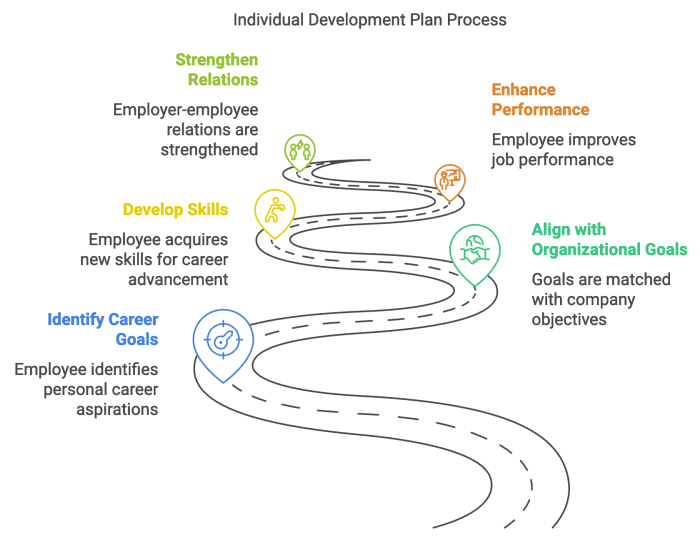
Source: engagedly.com
Professional velocity relies on the deep psychological mechanics that drive human behavior inside the modern enterprise. Navigating the treacherous waters of the contemporary labor market requires more than just acquiring technical skills or managing daily tasks. True career longevity demands a synchronization between the inner psyche and the external professional world, transforming abstract desires into tangible, upward mobility.
When individuals anchor their professional trajectories in core intrinsic motivations, the brain releases a steady stream of dopamine associated with autonomy, mastery, and purpose. According to psychological research pioneered by Edward Deci and Richard Ryan regarding Self-Determination Theory, human beings thrive when their daily actions satisfy psychological needs rather than merely chasing extrinsic rewards like monetary compensation or superficial status titles.
When a career path mirrors an individual’s authentic internal values, cognitive dissonance decreases dramatically, allowing for sustained focus and resilience during periods of corporate restructuring or economic downturns. This psychological alignment triggers a state of psychological ownership, where employees view their career milestones not as mandatory hurdles imposed by management, but as natural extensions of their personal identity. Consequently, burnout rates plummet, and creative problem-solving capacities expand, because the energy expended at work feels like a direct investment in the self rather than a transactional depletion of personal resources.
By bridging the gap between personal philosophy and daily output, professionals build an impenetrable psychological armor against workplace apathy, ensuring that every strategic move forward feels both meaningful and dynamically energized.
The Execution Procedure of Personal Core Value Audits
Establishing a firm bedrock for working life advancement requires a systematic, objective investigation into the foundational beliefs that govern daily decision-making. Transitioning from passive employment to active career architecture demands a rigorous examination of personal non-negotiables through a structured audit process.
To successfully map out these internal drivers and align them with career milestones, professionals must execute a deliberate four-phase evaluation protocol designed to filter out societal noise and unearth authentic priorities:
- Reflective extraction involves journaling past peak professional moments where a deep sense of fulfillment or pride was experienced, isolating the specific underlying triggers that caused those positive emotional states.
- Polarity sorting requires listing fifty common workplace values, systematically categorizing them, and progressively eliminating items until exactly five core principles remain as the absolute bedrock of professional existence.
- Friction analysis demands evaluating the current occupational landscape to pinpoint exact daily tasks, corporate policies, or stakeholder interactions that directly violate the newly identified top five values, thereby exposing hidden sources of professional drag.
- Trajectory calibration bridges the audit results with future milestones by rewriting current career goals to explicitly require the operationalization of those core values, ensuring future roles match internal ethics.
Through this meticulous inventory, professionals stop drifting through the labor market and instead take the helm, steering toward destinations that honor their authentic psychological needs.
Case Study of Ethical Misalignment and Stagnation
Corporate history is laden with cautionary tales of exceptionally talented individuals whose professional momentum ground to a sudden halt simply because their personal integrity clashed with the operational reality of their employer. A glaring real-life example of this phenomenon is observed in the trajectory of mid-level environmental engineers entering aggressive, growth-at-all-costs resource extraction firms.
Consider the professional fate of Marcus, a dedicated structural sustainability specialist who joined a legacy real estate development corporation known for rapid project delivery and aggressive urban expansion. Marcus possessed immense technical acumen and an undeniable ambition to reach the executive suite, yet his personal core values centered strictly on ecological preservation and community stewardship. Within eighteen months, Marcus experienced severe career stagnation, characterized by missed promotions, chronic exhaustion, and a paralyzing inability to deliver standard project approvals.
The root cause was not a lack of competence, but a profound ethical friction; every time Marcus was pressured to sign off on zoning clearances that bypassed environmental impact safeguards, his internal alarm bells triggered acute psychological resistance. His subconscious mind recognized the corporate directive as a threat to his personal identity, causing a protective freeze response that manifested as procrastination, missed deadlines, and visible disengagement during high-stakes board meetings.
Senior leadership misinterpreted this defensive withdrawal as a lack of leadership potential, subsequently bypassing him for critical promotions while rewarding peers whose ethical flexibility allowed them to prioritize profit margins over ecological impact. This illustrative scenario demonstrates unequivocally that when individual ethics collide with corporate mandates, the human psyche naturally sabotages upward mobility to preserve internal integrity, proving that outward success is fundamentally impossible without inward harmony.
True occupational velocity is never achieved by forcing oneself into a corporate mold, but by relentlessly shaping one’s professional environment to match the unyielding blueprint of personal integrity.
Modern workforce dynamics demand a stark departure from rigid, twentieth-century career management techniques toward fluid, value-driven navigation systems. The following comparative matrix Artikels the operational differences between legacy career tracking and contemporary holistic alignment strategies.
Crafting a targeted career blueprint transforms ambition into tangible milestones. True professional evolution requires moments of elite clarity, which you can discover through Best luxury weekend getaways accessible by private jet offering breathtaking alpine vistas. Returning from such serene heights, you will execute your strategic growth milestones with renewed focus, successfully bridging the gap between your current position and ultimate executive potential.
| Strategic Dimension | Traditional Career Tracking Methods | Modern Holistic Alignment Strategies | Long-Term Professional Impact |
|---|---|---|---|
| Primary Motivation Driver | Extrinsic rewards, financial compensation, and vertical title progression. | Intrinsic satisfaction, personal mastery, and deeply rooted purpose. | Modern strategies prevent sudden burnout and ensure decades of sustained enthusiasm. |
| Decision-Making Framework | Cost-benefit analysis based exclusively on immediate resume enhancement. | Ethical congruence matching daily tasks with personal core values. | Holistic decisions foster authentic leadership styles that attract high-value opportunities. |
| Adaptability to Market Shifts | Rigid adherence to predefined five-year corporate ladder milestones. | Fluid pivots based on where personal values can deliver maximum societal impact. | Holistic professionals easily navigate automation and industry disruption without identity crises. |
| Measurement of Success | External validation, corner offices, and peer recognition metrics. | Internal peace, psychological ownership, and congruence of lifestyle. | True alignment creates holistic wealth that transcends mere financial accumulation. |
Crafting a customized blueprint requires ruthless self-auditing of current competencies alongside the identification of hidden professional gaps.

Source: slidebazaar.com
Progress in any modern industry demands a stark, unvarnished look in the professional mirror, moving past comforting assumptions to dissect daily operational realities. Professionals frequently miscalculate their market value because they measure competence by tenure rather than verifiable impact, creating a dangerous discrepancy between perceived mastery and actual workplace output. True career acceleration begins when ambition collides with objective reality, exposing the fragile scaffolding of habits that prevent mastery.
By systematically isolating what you actually deliver from what you think you deliver, you dismantle the psychological barriers that stall upward mobility, paving a reliable path toward executive-level readiness.
Stepping back to evaluate your professional standing requires a deliberate strategy to neutralize the overconfidence effect and the Dunning-Kruger cognitive trap, which consistently lead practitioners to overestimate their expertise in unfamiliar domains. To dismantle these mental distortions, you must abandon subjective feelings of competence and instead anchor your self-assessment in hard, external metrics, verifiable project outcomes, and empirical peer data.
Start by indexing every professional task you performed over the last two quarters, categorizing them strictly by measurable deliverables, error rates, and stakeholder satisfaction scores. Next, systematically cross-reference these records against recognized industry frameworks, such as the SFIA framework for IT professionals or project management body of knowledge standards, to establish a baseline free from emotional bias. Invite structured, anonymous feedback from cross-functional partners who witness your operational friction points firsthand, looking specifically for recurring themes regarding communication breakdowns, technical bottlenecks, or analytical blind spots.
When reviewing this incoming data, treat praise as mere noise and isolate critical feedback as signal data for your development engine. By pairing your internal performance logs with harsh, triangulated external reviews, you construct a high-resolution map of your capabilities, exposing the precise vulnerabilities that secretly cap your earning potential and derail your trajectory.
Execution Methodology for Comprehensive Competency Evaluation
Executing an exhaustive appraisal of your professional skill set requires a structured sequence of investigative steps designed to strip away self-deception and surface hidden liabilities. Implementing this multi-tiered audit transforms vague career anxieties into actionable data points, ensuring that every subsequent hour of professional development directly targets a genuine operational weakness.
Crafting a strategic personal roadmap fuels true career acceleration, yet every monumental professional milestone deserves an unforgettable celebration. Picture soft candlelight illuminating a table featuring the Best fine dining restaurants for anniversary dinners , where exquisite culinary artistry matches your dedication. Relishing those hard-earned victories revitalizes your inner drive, empowering you to return to your blueprint and conquer even greater ambitions with renewed absolute clarity.
- Audit historical project outputs by collecting past performance reviews, client testimonials, and quantitative key performance indicator reports to establish an empirical baseline of your actual historical contribution.
- Deploy a standardized 360-degree survey instrument to direct reports, peers, and supervisors, enforcing anonymity to capture unvarnished perceptions of your leadership, technical execution, and collaborative efficacy.
- Map current daily responsibilities against the competency requirements of the next two hierarchical rungs in your organization, noting every divergence between your present workflow and future demands.
- Analyze time-tracking logs from the preceding month to identify activities where you experience prolonged hesitation or cognitive fatigue, which reliably indicates an underlying skill deficit or knowledge gap.
- Conduct a gap analysis matrix comparing your audited skill inventory against current job descriptions for your target role in the broader market, isolating missing certifications, software proficiencies, or domain expertise.
Consider the professional trajectory of Marcus, a senior software architect at a mid-sized fintech firm who assumed his decade of coding experience guaranteed him an upcoming promotion to director of engineering. Marcus consistently delivered clean code and met his individual sprint deadlines, leading him to believe his technical mastery was unimpeachable and his advancement was merely a matter of waiting his turn.
However, a ruthless self-audit revealed a critical, unacknowledged deficiency in cross-functional financial modeling and cloud infrastructure cost optimization—skills vital for executive leadership. While Marcus possessed deep legacy programming expertise, he had completely ignored modern containerization scaling and unit economics, remaining blissfully unaware that these hidden gaps disqualified him from the boardroom. When management evaluated candidates for the director role, Marcus stumbled during the strategic budget defense because he lacked the vocabulary to translate engineering output into financial risk mitigation.
Recognizing this minor technical and financial deficiency acted as a brutal awakening, prompting Marcus to enroll in targeted executive education and secure cloud financial management certifications over the next nine months. This intervention recalibrated his approach, shifting his promotional timeline from an indefinite stall to a validated advancement path that culminated in his appointment just twelve months later.
| Current Proficiency Level | Target Competencies | Bridging Actions | Anticipated Completion Timeframes |
|---|---|---|---|
| Basic Working Knowledge of Legacy SQL Databases | Advanced Cloud Data Architecture and Snowflake Integration | Complete rigorous vendor-certified online bootcamps and build a staging data warehouse sandbox | 4 Months |
| Intermediate Public Speaking and Internal Team Updates | Executive Boardroom Presentation and Crisis Communication | Join advanced public speaking workshops, hire a presentation coach, and lead quarterly earnings reviews | 6 Months |
| Basic Understanding of Agile Sprint Planning | Scaled Agile Framework (SAFe) Program Consultant Certification | Enroll in accredited certification courses and shadow enterprise release train engineers | 3 Months |
| Operational Competence in Individual Task Management | Cross-Functional Portfolio Management and Risk Mitigation | Obtain Project Management Professional designation and manage a pilot cross-departmental initiative | 8 Months |
Objectivity in career development is not found in the comfort of past achievements, but in the merciless audit of present shortcomings.
Translating vague professional aspirations into rigorous tactical stepping stones demands the application of strict temporal parameters and metrics.
Transforming distant career ambitions into daily reality requires dismantling monumental goals into disciplined, actionable phases that fit neatly into executive calendars. Vague dreams of future success evaporate without the anchor of structured timelines, leaving professionals adrift in a sea of perpetual planning rather than execution. The journey from a ten-year vocational horizon down to a ninety-day operational sprint relies on an architectural approach to career engineering, where every single quarter acts as a load-bearing pillar for long-term momentum.
Picture an intricate mechanical watch ticking with relentless precision, where every microscopic gear must turn synchronously to drive the sweeping hands forward. Similarly, scaling massive professional heights demands that a ten-year vision is reverse-engineered into three-year strategic blocks, which then cascade into annual targets, ultimately crystallizing into quarterly performance sprints. Navigating this granular descent means evaluating daily workflows against overarching career north stars, ensuring that current tasks directly fund future occupational equity.
Success is never rented on a generalized timeline; it is bought outright through the rigorous daily execution of micro-milestones backed by immutable data metrics.
Deconstructing Decadal Visions into Quarterly Sprints
Scaling down a ten-year career masterpiece into quarterly sprints requires a calculated descent through specific temporal brackets that bridge imagination and operational reality. A decade-long horizon provides the ultimate destination, yet navigating it blindly guarantees stagnation, making the quarterly sprint the absolute engine of modern career progression. Operating in ninety-day increments mirrors agile project management methodologies successfully deployed by high-performing organizations worldwide, such as Google and Intel, which rely on focused OKRs to maintain market dominance.
Execution at this micro-level prevents the psychological paralysis often triggered by overwhelming long-term targets, replacing anxiety with the rhythmic satisfaction of completed quarterly cycles. Professionals must isolate three distinct outcome-based objectives for every ninety-day window, ensuring these micro-goals serve as direct prerequisites for the subsequent annual benchmark. Visualizing this process is akin to charting a high-altitude mountaineering expedition where base camps are established at strict vertical intervals to monitor oxygen levels, acclimatize the team, and secure survival before attempting the ultimate summit.
Engineering Quantifiable Key Performance Indicators for Competency Elevation
Precision measurement separates professional wishful thinking from undeniable career mastery, necessitating the deployment of robust Key Performance Indicators tailored strictly to individual skill acquisition. Establishing these metrics transforms subjective feelings of hard work into empirical proof of market value, providing undeniable evidence during performance reviews and executive board evaluations. Tracking this data accurately requires shifting focus from mere activity output to actual capability outcome, measuring the depth of expertise rather than just the hours logged at a desk.
Professionals often stumble by tracking superficial vanity metrics, such as the sheer volume of emails sent or meetings attended, instead of measuring high-impact competency expansion like closed high-value contracts or architectural code deployments. Implementing a reliable tracking framework involves defining baseline measurements today, setting percentage-based growth targets for the quarter, and establishing automated logging mechanisms that eliminate human bias. Consider a digital marketing specialist transitioning into executive leadership; instead of tracking campaign creation frequency, the individual measures the percentage increase in team-led conversions and the successful completion of a recognized strategic management certification.
Crafting a career roadmap demands intentional milestones and sharp focus, yet sustained progress truly thrives when you unplug completely. Imagine retreating to Top secluded luxury cabin rentals for weekend trips nestled deep within towering pine forests, where morning mist rolls over glass lakes to offer profound clarity. Stepping away from daily routines revitalizes your inner drive, empowering you to return with renewed vision and actionable strategies for ultimate professional triumph.
To successfully implement this measurement strategy across diverse professional landscapes, practitioners must rely on standardized frameworks that connect qualitative skills to hard numerical data points. The following foundational rules govern the creation of bulletproof personal KPIs:
- Anchor every metric to a verifiable external standard, such as industry certifications, peer-reviewed project outcomes, or certified financial revenue generation.
- Establish trailing and leading indicators simultaneously, ensuring you monitor both the preparatory inputs and the final performance outputs.
- Review metric trajectories bi-weekly in a dedicated audit session to catch performance drift before a quarterly sprint completely derails.
- Maintain a centralized data repository or digital dashboard that visualizes your professional growth curve through automated charts and progression graphs.
Pitfalls in Milestone Setting and Strategic Circumvention
Ambition frequently outpaces operational capacity, leading professionals to construct unrealistic milestones that inevitably trigger burnout, cynicism, and professional abandonment. Recognizing these common psychological traps allows career strategists to build protective guardrails into their tactical plans, preserving energy and long-term motivation. Navigating these obstacles successfully transforms potential career derailments into valuable calibration exercises that strengthen overall professional resilience.
Many high-achieving individuals fall victim to the planning fallacy, consistently underestimating the time and cognitive load required to master complex new competencies while maintaining standard operational duties. Circumventing this requires adding a mandatory thirty-percent buffer time to all timeline estimates, absorbing unforeseen industry disruptions, personal burnout, or organizational restructuring without breaking momentum. Visualizing this strategic buffer is similar to designing modern suspension bridges that incorporate flexible engineering tolerances to withstand severe environmental pressures without fracturing their core structure.
Professionals navigating aggressive growth phases must remain acutely aware of recurring tactical hazards and their corresponding countermeasures, as Artikeld in the structured breakdown below:
- Overestimating Short-Term Capacity: Committing to excessive concurrent skill acquisitions leads to cognitive overload; circumvent this by restricting focus to one primary technical competency and one secondary leadership skill per quarter.
- Neglecting Baseline Audits: Setting advanced milestones without verifying foundational skills causes immediate failure; circumvent this by executing a rigorous competency gap analysis prior to drafting quarterly sprints.
- Ignoring Qualitative Feedback Loops: Relying exclusively on self-assessment creates blind spots in performance; circumvent this by integrating mandatory quarterly reviews with impartial mentors or direct supervisors.
- Rigid Plan Adherence: Refusing to pivot when market dynamics or industry technologies shift renders milestones obsolete; circumvent this by building formal adaptive review gates at the forty-five-day mark of every sprint.
Comprehensive Milestone Execution Matrix
Synthesizing temporal parameters, metric descriptions, resource allocation, and verification methods into a unified operational framework eliminates ambiguity and drives flawless execution. This matrix serves as the ultimate tactical dashboard for the modern professional, mapping abstract career aspirations directly to concrete, verifiable reality. Reviewing this structured layout provides a clear visual blueprint of how complex multi-year trajectories are successfully broken down into manageable, accountable components.
| Timeframe | Metric Description | Required Resources | Verification Methods |
|---|---|---|---|
| Quarter 1 (90 Days) | Acquire advanced cloud architecture certification with minimum 85 percent score. | Official study platform subscription, 10 weekly dedicated hours, mentor oversight. | Official digital certificate badge issuance and transcripts. |
| Quarter 2 (180 Days) | Lead cross-functional engineering team of five to deliver legacy system migration on schedule. | Project management software, leadership workshop access, executive sponsorship. | Signed stakeholder sign-off document and sprint delivery logs. |
| Quarter 3 (270 Days) | Publish two peer-reviewed technical whitepapers in recognized industry journals. | Data analytics software, quiet writing environment, academic editing service. | Official publication links and editorial acceptance letters. |
| Quarter 4 (365 Days) | Negotiate and secure a fifteen percent budget expansion for departmental innovation initiatives. | Financial forecasting tools, historical ROI reports, executive presentation deck. | Approved fiscal year budget ledger and signed authorization memo. |
Accelerating upward trajectory necessitates the deliberate cultivation of strategic alliances and the pursuit of tacit knowledge transfer.
Stepping into the upper echelons of modern industry requires far more than isolated individual excellence or flawless execution of day-to-day responsibilities. Behind every meteoric rise in the corporate world lies an intricate web of human connections, unspoken cultural codes, and the fluid exchange of wisdom that never appears in official training manuals. Professionals who master the art of navigating organizational sociology consistently outperform those who rely strictly on technical merit alone.
Climbing the proverbial ladder is fundamentally a team sport played within complex, often political ecosystems.
Within competitive corporate ecosystems, the sociological dynamics of building high-value reciprocal relationships rely heavily on exchange theory, structural holes, and social capital accumulation. In high-stakes business environments, power does not merely rest in organizational charts; it flows through informal communication networks and interpersonal trust bridges. When ambitious professionals successfully span structural holes—connecting disparate departments or isolated leadership cliques—they become indispensable conduits of fresh perspectives and innovative problem-solving.
However, sustainable alliances cannot be forged through mere transactional networking, which often alienates senior stakeholders. Instead, genuine reciprocity thrives on the mutual alignment of professional interests, shared intellectual curiosity, and the deliberate offer of unsolicited value. By consistently bringing fresh market insights, alleviating operational pain points for overloaded directors, and demonstrating absolute discretion, rising operators shift their positioning from interchangeable subordinates to trusted inner-circle confidants.
This organic integration into power networks accelerates the absorption of tacit knowledge—those invaluable, unwritten rules of corporate survival and strategic decision-making that separate mid-level managers from executive visionaries.
Strategic alliances are the hidden architecture of career momentum; they transform isolated competency into undeniable organizational influence.
Tactical Outreach Methodology for Securing Senior Mentors
Approaching established industry leaders requires a disciplined, non-desperate methodology that respects their time while clearly signaling intellectual maturity and professional alignment. Securing high-level guidance is an art form rooted in preparation, psychological safety, and reciprocal value proposition rather than outright supplication.
- Conduct deep-dive research into the target leader’s recent professional publications, public presentations, or corporate initiatives to identify specific, nuanced operational challenges they are currently tackling.
- Craft a concise, highly targeted initial communication that opens with a specific insight derived from their recent work, immediately establishing peer-level intellectual respect rather than asking for general career advice.
- Offer immediate, low-friction value by sharing a relevant industry data point, an unreleased case study, or a synthesized market report that directly addresses a known pain point within their operational scope.
- Propose a micro-engagement by requesting a tightly time-boxed, fifteen-minute virtual conversation focused on a single, highly specific technical question rather than an open-ended, lifelong mentorship commitment.
- Execute rigorous follow-through by implementing their advice swiftly, documenting the measurable outcomes, and reporting back with a concise success update that reinforces their impact and validates their investment of time.
Comprehensive Procedure for Establishing Peer Mastermind Accountability Circles
While senior mentors provide vertical vision and strategic sponsorship, lateral support systems are vital for maintaining daily operational velocity and emotional resilience. Building a high-functioning peer mastermind requires structural rigor, absolute confidentiality, and unwavering commitment to mutual growth.
- Curate a tightly vetted roster of four to six ambitious professionals operating at a similar career velocity but across non-competing industries or distinct business units to prevent internal political friction and ensure cognitive diversity.
- Establish a formal charter defining strict confidentiality protocols, mandatory attendance policies, and a zero-tolerance rule for passive participation or superficial status updates during structured sessions.
- Implement a rotating hot-seat agenda for bi-weekly meetings where each member receives dedicated time to present a critical roadblock, submit it to intense peer critique, and commit to verifiable tactical deliverables by the next gathering.
- Deploy a digital tracking dashboard utilizing collaborative project management software to maintain transparency regarding individual goal execution, key performance indicators, and milestone completion between live sessions.
- Conduct mandatory quarterly reviews of group synergy, assessing whether all participants are contributing equally to the intellectual capital of the circle and rotating out members who fail to maintain high accountability standards.
The visual composition of a successful mastermind session captures a diverse group of focused professionals gathered around a minimalist oak table in a sunlit glass-walled boardroom. Spread across the surface are detailed career roadmaps, sleek tablet devices displaying real-time productivity metrics, and steaming cups of coffee. The body language of the participants is intensely engaged—forward-leaning postures, active note-taking, and expressions of deep mutual respect—illustrating a collaborative environment where high-caliber minds actively construct each other’s professional futures.
Comparative Analysis of Professional Growth Alliances
Navigating career advancement effectively requires deploying the right type of human alliance for the specific growth phase at hand. The following comprehensive matrix breaks down the four primary developmental relationships across key operational dimensions.
Crafting a strategic career roadmap empowers you to reach new professional heights with unwavering focus and sharp intent. Amidst charting these ambitious milestones, sometimes true clarity emerges when you master How to plan a surprise luxury weekend trip to reset your mind. Returning from that lavish pause, you will accelerate your journey toward ultimate professional mastery.
| Alliance Type | Depth | Speed | Cost | Impact |
|---|---|---|---|---|
| Mentorship | High | Moderate | Low Financial / High Time | Transformative Wisdom Transfer |
| Sponsorship | Very High | Rapid | High Political Capital | Accelerated Promotion Velocity |
| Peer Coaching | Moderate | Fast | Equal Reciprocal Effort | Consistent Operational Execution |
| Mastermind Alliance | High | Sustained | High Accountability Commitment | Long-Term Strategic Resilience |
Navigating inevitable professional turbulence requires engineering adaptive resilience mechanisms and maintaining continuous iterative feedback loops
Career growth rarely resembles a linear ascent; rather, it unfolds as a dynamic series of expansions and contractions where unforeseen disruptions test the structural integrity of even the most meticulous master plans. High-achieving professionals understand that sudden market shifts, corporate restructuring, or stalled promotions are not definitive dead ends, but rather critical diagnostic signals that expose hidden vulnerabilities within their current trajectory.
By systematically transforming unexpected vocational friction into actionable intelligence, elite performers bypass emotional paralysis and systematically re-engineer their momentum to emerge stronger on the other side of adversity.
When an unexpected career setback occurs, high-performing individuals process the shock through a rigorous, almost clinical debriefing framework that separates emotional frustration from objective data points. Instead of internalizing the failure, they treat the event as an empirical anomaly in their operational system, immediately initiating a root-cause analysis to determine whether the breakdown stemmed from shifting macroeconomic variables, misaligned skill sets, or internal political miscalculations.
This cognitive compartmentalization allows them to extract valuable lessons without incurring a loss of self-efficacy. They then channel this newly acquired empirical data back into their overarching vocational master plan, adjusting their risk parameters and accelerating the acquisition of adjacent competencies to ensure future security. Resilient professionals maintain a robust psychological distance from their job titles, viewing their career not as a fragile glass sculpture, but as an adaptable, modular portfolio of transferable skills that can be rapidly redeployed across different sectors whenever traditional pathways close.
Systematic retrospective protocols for vocational recalibration
Executing a disciplined monthly retrospective transforms abstract career ambitions into measurable, data-driven outcomes by holding every professional milestone accountable to reality. Without a systematic review cadence, professionals risk sleepwalking through obsolete strategies while market demands evolve beneath their feet. Implementing a rigorous evaluation routine ensures that small misalignments are corrected in real time before compounding into catastrophic career stalls.
- Schedule a dedicated ninety-minute reflection window on the final Friday of every month, treating this appointment with the same inviolable authority as a board-level meeting.
- Audit the quantitative output of the previous four weeks against the predefined key performance indicators established in the master vocational blueprint.
- Evaluate the qualitative health of critical professional alliances, identifying which relationships yielded reciprocal value and which require strategic nurturing.
- Analyze the velocity of skill acquisition by measuring completed modules, certifications, or practical projects against the monthly learning quota.
- Recalibrate the upcoming month’s tactical stepping stones based strictly on empirical performance data rather than optimistic projections or emotional fatigue.
True professional resilience is not the absence of turbulence, but the absolute mastery of the feedback loop that turns chaos into directional velocity.
Consistency in this review process breeds an acute self-awareness that acts as an early warning system against professional stagnation. By consistently measuring actual output against targeted milestones, individuals develop a hyper-realistic understanding of their market value and operational efficiency. This empirical foundation empowers them to make decisive mid-course corrections, eliminating dead-weight projects and doubling down on high-yield initiatives with absolute confidence.
Mental imagery and behavioral shifts during industry-wide disruptions
Picture a seasoned maritime captain standing tall on the bridge of a massive vessel as monumental rogue waves rise out of an ink-black horizon, threatening to overwhelm the deck. Instead of panicking or freezing at the helm, the captain visualizes the storm not as a destructive force of annihilation, but as an immense reservoir of kinetic energy waiting to be harnessed.
The mental imagery shifts from a posture of defensive crouching to one of aggressive, calculated navigation, where every cresting wave is seen as a propulsive surge capable of launching the ship forward at unprecedented speeds. The psychological posture transforms instantly from anxious victimhood to cold, strategic sovereignty over the elements.
Behavioral manifestations of this mental pivot involve an immediate cessation of passive waiting and a fierce mobilization toward proactive exploration of adjacent markets. Professionals experiencing this paradigm shift discard their legacy operational playbooks and adopt an experimental, startup-like velocity within their own daily routines. They actively hunt for emerging pain points across adjacent industries, rapidly volunteering for cross-functional crisis-management task forces to make themselves indispensable nodes of problem-solving.
External chaos is met with internal stillness and hyper-focused execution, turning generalized market panic into a personal masterclass in situational agility and reinvention.
Comprehensive matrix of career obstacles and strategic countermeasures, How to build a personal development plan for career growth
Navigating the unpredictable currents of modern professional life requires a pre-engineered contingency framework that bridges the gap between sudden disruption and long-term stability. The following matrix Artikels common career disruptions paired with immediate triage actions, structural pivots, and preventative safeguards designed to insulate high-performing individuals from systemic shocks.
| Unexpected Career Obstacle | Immediate Triage Action | Long-Term Vocational Pivot | Preventive Safeguard |
|---|---|---|---|
| Sudden corporate redundancy or department liquidation | Secure immediate financial runway, download professional archives, and notify trusted inner circle of market availability. | Transition into a fractional advisory model or launch an independent consulting practice leveraging specialized domain expertise. | Maintain a diversified portfolio of income streams and cultivate a cross-industry network well before any crisis strikes. |
| Obsolescence of core technical skill due to rapid automation | Enroll in intensive accelerated bootcamps focusing on emerging generative platforms and human-centric leadership frameworks. | Shift positioning from a tactical executor to a high-level strategic architect who directs automated systems. | Dedicate a non-negotiable five percent of weekly operational hours exclusively to learning adjacent, future-proof competencies. |
| Chronic stagnation and blocked vertical promotion channels | Request a formal performance audit to uncover hidden political bottlenecks or unrecognized competency gaps. | Execute a lateral move into an high-growth business unit or secure an external role within a market-disrupting startup. | Regularly update public portfolios and document measurable achievements to ensure constant external market visibility. |
Deploying this structured matrix acts as an intellectual vaccination against professional vulnerability, ensuring that unexpected crises trigger pre-rehearsed tactical responses rather than debilitating uncertainty. When individuals map out their potential failure points and engineer corresponding safeguards, they strip fear of its paralyzing power and replace it with systematic operational readiness. This meticulous preparation transforms turbulence from a career-threatening hazard into an engine for continuous self-renewal.
Concluding Remarks: How To Build A Personal Development Plan For Career Growth
_Example_Template.webp1.dat?w=700 "Personal Development Plan, Career Plan, Self Improvement , Personal ...")
Source: ismartrecruit.com
Mastering your professional destiny requires a steadfast commitment to continuous self-reflection, strategic execution, and adaptive resilience. As you implement these structured frameworks, remember that every master plan thrives on iterative feedback and relentless refinement. By anchoring your daily actions to profound intrinsic motivators and nurturing reciprocal alliances, you are no longer just surviving the corporate landscape—you are actively shaping its future.
Step forward with unwavering confidence, embrace the inevitable turbulence as fuel for growth, and watch your career aspirations materialize into breathtaking reality.
