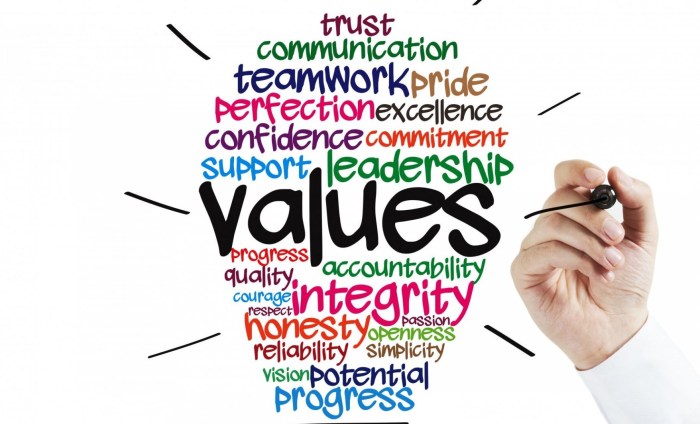
Professional values stand at the very heart of how we navigate the complex corridors of modern corporate life, where silent unwritten codes quietly guide our daily decisions and moral compasses. Beneath the polished surface of bustling boardrooms and glowing digital screens, professionals constantly walk through uncharted ethical territories, balancing organizational loyalty against personal convictions as hidden biases and algorithmic shifts challenge our deepest beliefs.
As multinational teams bridge cultural divides and traditional mentorship gives way to bold cross-generational partnerships, the modern enterprise is undergoing a profound transformation. This evolving landscape demands a delicate orchestration of empathetic leadership, operational accountability, and digital sovereignty, proving that true corporate success relies on our collective courage to embrace vulnerability, honor diverse perspectives, and uphold uncompromising integrity.
Professionals constantly navigate uncharted moral territories where intuition alone fails to secure workplace integrity.
Modern boardrooms and open-plan offices rarely display the pristine moral compasses advertised in glossy corporate brochures. Beneath the polished veneer of productivity metrics and quarterly earnings reports lies a complex labyrinth of unspoken expectations and subtle peer pressures. Individuals arrive at their desks equipped with personal codes of ethics, yet they quickly realize that survival and advancement require decoding the invisible currents of office politics.
Moral dilemmas rarely announce themselves with blaring sirens; instead, they whisper through delayed promotions, subtle exclusions from critical email threads, and the heavy weight of conformity that settles over a team during a high-stakes crisis.
Unwritten office codes quietly shape daily decision-making processes across modern corporate environments by establishing a shadow culture that operates parallel to official compliance handbooks. When a newly appointed project manager enters a firm, formal training manuals dictate standard operating procedures, but the corporate subculture dictates behavioral reality. Employees quickly observe who gets rewarded for bending deadlines or masking minor compliance failures, learning that institutional memory prioritizes harmony and speed over absolute transparency.
This psychological conditioning occurs through micro-interactions—a knowing glance from a senior director when a safety report is streamlined, or the collective sigh of relief when an uncomfortable truth is quietly swept beneath the rug of administrative convenience. Over time, these silent norms rewire the individual’s baseline for acceptable conduct, replacing personal conscience with a flexible pragmatism tailored to corporate survival.
Real-world compliance data from corporate governance watchdogs consistently demonstrates that major financial scandals rarely begin with grand conspiracies; rather, they sprout from thousands of minor, silent compromises where professionals choose the path of least resistance to align with prevailing organizational currents.
Psychological Triggers Driving Organizational Loyalty
Understanding why capable, morally grounded professionals routinely compromise their core beliefs requires examining the deep-seated cognitive mechanisms activated within hierarchical structures. Human psychology is inherently wired for tribal inclusion, and the modern workplace functions as a high-stakes tribe where dissent carries severe social and economic penalties. When institutional pressures clash with personal convictions, several distinct mental triggers override individual judgment, compelling employees to safeguard the collective entity rather than their own ethical standards.
- The fear of professional obsolescence and social ostracism activates survival instincts, pushing individuals to adopt the group consensus even when that consensus violates objective standards of right and wrong.
- Cognitive dissonance mitigation leads employees to rationalize minor ethical breaches as necessary evils, convincing themselves that loyalty to the brand serves a greater good that outweighs temporary moral concessions.
- Authority bias deeply embeds itself in corporate hierarchies, causing subordinates to defer automatically to executive directives under the comforting illusion that leadership possesses superior information and ultimate moral responsibility.
Integrity in the modern enterprise is rarely tested by dramatic crises; it is eroded in the quiet spaces where convenience whispers louder than conviction.
Comparative Models of Workplace Integrity
Navigating the chasm between stated corporate values and daily operational realities demands a structural examination of how organizations evaluate right and wrong. The evolution from rigid, rule-bound compliance to dynamic, context-aware integrity models reflects the growing complexity of global business ecosystems. The following comparative matrix Artikels the operational shift from traditional paradigms to contemporary situational frameworks.
| Evaluation Metric | Traditional Ethical Framework | Contemporary Situational Integrity Model | Impact on Daily Operations |
|---|---|---|---|
| Primary Focus | Strict adherence to written rulebooks and legal minimums. | Dynamic assessment of cultural health and human impact. | Shifts focus from box-ticking compliance to active moral reasoning. |
| Decision Ownership | Centralized compliance departments and legal counsel. | Distributed responsibility across all operational tiers. | Empowers frontline workers to flag ethical friction immediately. |
| Handling Ambiguity | Perceived as a loophole to exploit or a risk to avoid. | Recognized as a vital opportunity for principled innovation. | Transforms unexpected moral gray areas into trust-building moments. |
| Failure Response | Punitive measures and scapegoating to protect brand image. | Systemic root-cause analysis and transparent psychological safety. | Encourages early confession of errors before catastrophic failure occurs. |
Hidden personal biases frequently undermine the purest intentions during high-stakes corporate negotiations.
Source: versoriaonline.com
Beneath the polished mahogany tables and the gleaming glass facades of modern corporate headquarters, silent currents of human perception constantly reshape the fate of multi-million dollar agreements. Even the most seasoned executives, armed with exhaustive spreadsheets and ethical codes of conduct, frequently find their best intentions derailed by invisible mental shortcuts operating deep within the subconscious mind.
Navigating the complex ecosystem of modern enterprise requires an acute awareness of how our brains process social dynamics under intense pressure. When adrenaline spikes and deadlines loom, the human mind instinctively reaches for familiar patterns, inadvertently sidelining objectivity and fracturing the fragile trust essential for equitable cross-functional collaboration.
Integrity and dedication anchor our careers, shaping the bedrock of lasting success through unwavering workplace ethics. Amidst demanding schedules, taking intentional mother daughter getaways revitalizes the spirit under warm, sunlit skies, fostering deep relational bonds. Ultimately, returning from these meaningful escapes renews our commitment to excellence, ensuring that core professional values continue to guide every ambition forward.
Cognitive Mechanisms Distorting Professional Fairness
Cross-functional teams bring together diverse departments such as engineering, finance, and marketing, each operating under distinct cultural norms and performance metrics. These operational divides create fertile ground for cognitive blind spots, where subtle mental filters quietly dictate how leaders evaluate contributions from outside their immediate sphere of familiarity.
At a neurological level, the human brain relies on heuristic processing to conserve energy during high-stress scenarios, an evolutionary survival mechanism that unfortunately breeds workplace prejudice. When a negotiator encounters colleagues from a different functional background, the amygdala rapidly assesses unfamiliar behavioral patterns through a lens of potential risk rather than opportunity. This rapid, subconscious categorization triggers affinity bias, causing leaders to unconsciously favor team members who share their educational pedigree or departmental jargon while marginalizing equally valid perspectives from other divisions.
Confirmation bias quickly follows, leading executives to selectively notice data points that validate their pre-existing departmental rivalries while dismissing empirical evidence presented by cross-functional peers. Furthermore, the fundamental attribution error distorts interpersonal evaluations, prompting leaders to attribute a marketing team member’s strategic delay to personal incompetence, while ascribing identical setbacks within their own engineering department to unavoidable market complexities. Recognizing these neurological roots transforms diversity initiatives from superficial compliance exercises into essential strategies for organizational survival, proving that true corporate integrity begins with mastering the architecture of one’s own mind.
Organizations that successfully mitigate these subconscious distortions often implement structured pause points during negotiation cycles, allowing analytical prefrontal cortex activity to override knee-jerk emotional reactions. By establishing rigorous, objective criteria prior to entering the boardroom, leadership teams create a cognitive buffer that protects minority viewpoints and dissenting data from being prematurely dismissed by the dominant departmental faction.
“We sat across the table, deadlocked for six agonizing hours over product timelines, convinced the marketing division was acting in bad faith. When I finally stepped back, breathed, and admitted out loud that my defensiveness stemmed from fear of missing my own quarterly targets rather than their operational failures, the entire temperature in the room plummeted. That single moment of radical self-awareness dismantled our defensive walls, unlocked a hidden compromise, and ultimately birthed the most profitable product launch in our company’s history.”
Strategic Frameworks for Behavioral Correction
Translating self-awareness into systemic corporate governance requires translating abstract psychological insights into tangible behavioral corrections. The following matrix Artikels common cognitive traps encountered during high-stakes negotiations alongside actionable operational adjustments designed to preserve equity and fairness.
| Cognitive Trap | Neurological Root | Observable Impact | Behavioral Correction |
|---|---|---|---|
| Affinity Bias | Amgydala-driven preference for familiar patterns | Favoring colleagues from one’s own department | Implementing blind proposal reviews before discussions |
| Confirmation Bias | PFC filtering data to match pre-existing beliefs | Dismissing metrics that contradict initial strategy | Appointing an official devil’s advocate for every session |
| Attribution Error | Overestimating personal traits over situational factors | Blaming cross-functional partners for systemic delays | Conducting mandatory root-cause environmental audits |
| Status Quo Bias | Desire to avoid cognitive friction of unfamiliar models | Rejecting innovative proposals from junior members | Requiring explicit risk-benefit analysis for status quo options |
Modern leadership demands the orchestration of empathy alongside strict operational accountability.

Source: thomasgriffin.com
Corporate landscapes across the globe are undergoing a seismic cultural shift where cold detachment no longer drives sustainable growth. Today, executives face the intricate challenge of balancing rigorous performance metrics with a profound human-centric approach. This delicate equilibrium transforms traditional hierarchies into dynamic ecosystems where people feel genuinely valued while delivering exceptional results.
Authoritarian management styles historically relied on fear and rigid compliance, which often stifled creativity and created high turnover rates in competitive industries. Conversely, compassionate supervision builds psychological safety, transforming the workplace into an environment where teams willingly push boundaries and solve complex problems with resilience. Research from organizations like Harvard Business Review consistently demonstrates that leaders who lead with emotional intelligence foster lower burnout rates and higher discretionary effort.
Integrity and dedication anchor our careers, shaping every daily milestone we achieve with purpose. As city streets buzz with morning energy, mastering crucial transferable skills for delivery drivers transforms routine navigation into profound mastery and sharp problem solving. Ultimately, these dynamic abilities elevate our core professional values, proving that steadfast commitment always paves the way toward remarkable, lasting achievement.
When employees know their supervisors genuinely care about their well-being and professional growth, they invest their best cognitive and creative resources into organizational goals. This intrinsic motivation drastically reduces the massive financial drains associated with constant recruitment and retraining, translating soft skills directly into hard economic returns.
Analyzing psychological safety and emotional intelligence in decentralized teams requires moving far beyond traditional surveys and annual performance reviews. Leaders of distributed engineering departments must adopt creative diagnostic frameworks to observe interpersonal dynamics and empathy growth across digital channels.
To accurately capture these nuanced shifts in emotional intelligence within remote engineering teams, organizations implement specific unconventional tracking methodologies:
- Peer recognition velocity tracking monitors the frequency and specificity with which engineers publicly celebrate each other’s achievements and support collaborative troubleshooting in shared digital workspaces.
- Sentiment shift analysis during critical incident post-mortems evaluates whether team members adopt a blame-free, curiosity-driven dialogue rather than defensive finger-pointing when systems fail.
- Cross-functional collaboration mapping uses communication metadata to measure how willingly engineers step outside their siloed tasks to mentor junior peers or assist overloaded neighboring product squads.
- Asynchronous check-in depth indicators assess the evolution of team members’ willingness to transparently share workflow bottlenecks and personal burnout markers before deadlines are critically compromised.
Genuine workplace compassion functions as an invisible economic engine, turning psychological safety into measurable quarterly profitability and sustainable market resilience.
Modern enterprises must visually and structurally contrast their legacy measurement techniques against empathy-driven milestones to understand the true financial impact of compassionate leadership.
| Metric Category | Legacy Metric Tracking Systems | Empathy-Driven Milestones | Tangible Economic Impact |
|---|---|---|---|
| Productivity Measurement | Raw hours logged and lines of code written | Problem-solving velocity and sustained output quality | Reduces costly rework and accelerates time-to-market |
| Retention Evaluation | Exit interview feedback and annual turnover rate | Proactive burnout mitigation and internal mobility | Saves thousands in recruitment costs per departed engineer |
| Collaboration Quality | Ticket closure speed without context | Peer support frequency and knowledge-sharing density | Enhances innovation capacity and cross-team synergy |
| Leadership Assessment | Strict adherence to operational schedules | Psychological safety scores and team psychological resilience | Drives higher discretionary effort and lowers absenteeism |
Cross-cultural collaboration shatters monolithic assumptions about workplace dignity and collective responsibility

Source: liveabout.com
Stepping inside the modern multinational arena reveals an intricate mosaic of human perspectives where traditional playbooks instantly dissolve. When global enterprises attempt to build unified operational frameworks, they quickly discover that fundamental concepts like workplace dignity and collective responsibility are profoundly shaped by local geography, history, and philosophical heritage. Rather than imposing a rigid, headquarters-driven corporate identity, enduring organizations actively weave together competing regional definitions of honor.
Integrity and dedication form the bedrock of meaningful careers, guiding every crucial decision we make in the modern workplace. Recently, observers watched structural revival reshape the historic hotel henry urban buffalo , turning neglected architectural heritage into a vibrant community beacon through sheer commitment. Ultimately, upholding these enduring principles ensures our daily labors continuously elevate both personal growth and collective community success.
This delicate synthesis requires moving past superficial compliance to embrace a vibrant tapestry of shared values that honors local pride while advancing universal enterprise goals.
Multinational corporations navigate this complex terrain by establishing decentralized ethical councils and localized listening posts that capture the nuances of regional honor systems. For instance, in many East Asian corporate environments, dignity is deeply intertwined with group harmony, face-saving protocols, and collective achievement, whereas Western paradigms frequently prioritize individual autonomy and direct personal accountability. To bridge these divergent worlds, successful entities like Unilever and Siemens deploy intercultural translation mechanisms.
They do not merely translate literal words; they decode behavioral intent, reframing strict operational compliance as a shared communal commitment rather than an authoritarian imposition. By establishing continuous feedback loops and localized ethical charters, these enterprises allow regional definitions of honor to inform the overarching corporate code. This dynamic calibration ensures that frontline workers from Tokyo to São Paulo see their native cultural integrity reflected in daily business practices, transforming potential ideological friction into a robust engine for sustainable corporate growth.
Communication breakdowns caused by misaligned cultural expectations regarding authority and directness
Operating across international borders routinely exposes subtle communication fractures that stem from deeply ingrained cultural assumptions about hierarchy and transparency. When teams misread the intent behind a direct critique or an ambiguous deference to leadership, operational efficiency stalls and interpersonal trust slowly erodes. Recognizing these specific friction points is essential for preventing costly misunderstandings in high-stakes global projects.
- Direct managerial feedback perceived as aggressive personal assault in high-context communication cultures where subtle cues replace blunt statements.
- Hesitation to challenge executive directives interpreted incorrectly as complete agreement rather than culturally mandated deference to seniority.
- Ambiguous status reporting mistaken for incompetence when regional norms dictate harmonious omission of negative operational news.
- Asynchronous decision-making friction arising when task-oriented cultures clash with relationship-first societies prioritizing extensive consensus-building over speed.
- Silent resistance manifesting when top-down directives ignore local community values, violating unspoken regional expectations of collective consultation.
Visualizing consensus during a profound philosophical deadlock
An expansive, sunlit glass-walled boardroom perched on the thirty-fifth floor overlooks a sprawling, rain-streaked Frankfurt skyline at twilight. Around a massive, reclaimed walnut table sit twelve executives from diverse geographic origins, their body language reflecting hours of intense debate over conflicting labor and ethics policies. At the center of the table lies an unrolled parchment covered in handwritten sticky notes, contrasting sharply with the muted glow of laptops.
A senior operations director from Mumbai leans forward, resting her forearms on the table, gesturing with open palms while explaining a nuanced concept of collective obligation that bridges individual merit and community welfare. Across from her, a regional compliance lead from Scandinavia nods slowly, his furrowed brow relaxing as he absorbs the alternative perspective, matching her open posture. The ambient noise of the city fades into a heavy, contemplative silence, momentarily pierced only by the soft hum of the ventilation system.
The harsh lines of disagreement begin to soften on their faces, replaced by an authentic curiosity and mutual respect. Natural amber light from the setting sun washes across the room, illuminating a shared realization that their divergent cultural viewpoints are not opposing forces to be defeated, but essential pieces of a much larger, more resilient puzzle.
Harnessing this dynamic requires organizations to abandon the pursuit of forced homogenization in favor of cultivating productive cultural friction. When leadership intentionally designs collaborative spaces where diverse teams can safely challenge foundational assumptions, innovation naturally accelerates. Real-world corporate history demonstrates this principle in action, such as when Nokia restructured its global design division by decentralizing authority, allowing Scandinavian minimalist efficiency to merge seamlessly with Asian ergonomic sensibilities.
This strategic embrace of productive tension prevented groupthink and generated market-leading insights that a monocultural approach could never achieve. Organizations that champion this rich interplay of perspectives discover that true operational strength is born not from the erasure of differences, but from the deliberate, respectful orchestration of them.
Steadfast professional values anchor our daily ambition, yet true clarity often demands a deliberate pause from the noise. Imagine stepping away under golden morning light to recalibrate your mind during a transformative retiro de yoga , where deep breaths restore your core purpose. Returning from this sanctuary, you bring renewed focus, sharp integrity, and elevated leadership back to your career.
Productive cultural friction transforms the inevitable discomfort of diverse global collaboration into the bedrock of resilient, innovative corporate governance.
Digital transformation forces a radical reevaluation of intellectual property boundaries and digital sovereignty
As organizations race toward total digitization, the invisible architecture of algorithms begins to reshape the fundamental boundaries of human labor, privacy, and corporate governance. This high-stakes technological evolution transcends mere software upgrades, triggering a profound reckoning over who truly owns our digital footprints and how decisions are made in the shadows of server racks.
Modern boardrooms now face an unprecedented friction point where the drive for relentless efficiency collides with the preservation of fundamental human agency. Navigating this terrain requires peering directly into the operational machinery that assigns metrics to human worth and productivity.
Algorithmic Oversight and Automated Performance Tracking
The contemporary workplace increasingly resembles a panopticon of continuous data streams, where automated management systems evaluate employee output in real time. This shift from human mentorship to algorithmic supervision introduces severe moral hazards, fundamentally altering the psychological contract between worker and employer. When a machine learning model assesses a software engineer’s code velocity or a customer service representative’s keystroke rhythm, the nuances of human creativity, burnout, and contextual challenges are routinely flattened into binary performance scores.
Consider the real-world precedent set by major global logistics and retail giants that deploy wrist-tracking wearables and predictive analytics to monitor warehouse pickers. These systems optimize routing down to the single second, yet they systematically trigger severe physical strain and psychological distress by penalizing workers for micro-breaks required for biological needs. Such automated tracking strips away the inherent dignity of labor, replacing professional judgment with a cold calculus of productivity quotients.
Furthermore, proprietary algorithms often operate as opaque black boxes, meaning workers disciplined or terminated based on automated metrics have no recourse to understand or contest the logic behind their dismissal.
This reality forces us to confront the philosophical implications of delegating moral choices to artificial intelligence systems. When an algorithm determines promotion trajectories, resource allocation, or disciplinary actions, responsibility is effectively diffused into lines of code. No single human programmer or executive takes direct ownership of the resulting injustice. This diffusion of moral agency threatens to erode organizational accountability entirely, turning human workers into mere data points managed by automated arbiters devoid of empathy, intuition, or ethical conscience.
The societal tension between maximizing computational output and safeguarding individual sovereignty manifests across several critical dimensions, highlighting the urgent need for structural evaluation.
| Dimension | Algorithmic Efficiency Focus | Human Autonomy Preservation | Societal Impact |
|---|---|---|---|
| Workforce Management | Instantaneous resource allocation and continuous output tracking | Protection of mental well-being and professional discretion | Erosion of trust versus sustainable labor practices |
| Data Governance | Monetization of comprehensive behavioral datasets | Enforcement of strict digital sovereignty and privacy | Surveillance capitalism versus individual self-determination |
| Decision Making | Speed and reduction of cognitive bias via automation | Ethical deliberation and contextual emotional intelligence | Systemic alienation versus accountable governance |
| Innovation Culture | Predictable scaling and risk minimization through standardization | Encouragement of serendipitous creativity and dissent | Stifled ingenuity versus resilient organizational ecosystems |
The collision between emerging surveillance capabilities and demands for organizational transparency creates complex operational paradoxes across modern enterprise ecosystems, setting the stage for future regulatory battles.
In an era where biometric telemetry dictates career progression, the ultimate corporate paradox emerges: absolute transparency of the workforce serves only to shroud the algorithmic master in impenetrable secrecy.
Legacy mentorship models are actively failing the newest generation of ambitious contributors entering the workforce: Professional Values

Source: saturdaygift.com
The glittering glass towers of global commerce are echoing with a quiet, generational fracture as conventional wisdom collides with disruptive digital reality. Traditional hierarchies built on decades of uninterrupted tenure are discovering that their playbook no longer applies to a workforce fluent in algorithmic disruption and rapid paradigm shifts. This friction demands a total structural redesign of how institutional memory and modern execution converge inside high-performance organizations.
Legacy mentorship frameworks consistently stumble because they operate on a flawed premise that experience flows in only one direction. When veteran executives attempt to mold incoming talent into carbon copies of past leadership archetypes, organizations bleed innovation and alienate their sharpest minds. Reverse mentoring programs shatter this unidirectional bottleneck, creating a fluid exchange where cultural maturity accelerates exponentially through mutual vulnerability.
By positioning digital natives as strategic advisors to the C-suite, companies dismantle entrenched corporate complacency and replace it with agile, empathetic problem-solving.
Authentic cross-generational knowledge transfer requires the raw emotional courage to unlearn outdated certainties and admit blind spots in front of junior peers.
Innovative procedures for pairing senior executives with junior disruptors, Professional values
Deploying unconventional alliances across corporate divides necessitates deliberate architectural design rather than leaving valuable cultural integrations to chance. The following strategic pathways Artikel how forward-thinking institutions systematically pair veteran authority with youthful agility to dismantle stagnation from within.
- The shadow strategy summit requires executive board members to accompany junior innovators through daily operational bottlenecks, exposing senior leaders to modern workflow friction points in real time.
- The reverse algorithmic audit pairs veterans with tech-first contributors to decode emerging digital markets, demanding that leadership openly acknowledge their technological limitations with radical candor.
- The blindspot roundtable utilizes anonymous feedback loops where junior disruptors challenge legacy policy assumptions, forcing executives to defend foundational corporate habits against modern ethical standards.
- The empathy immersion project mandates that leadership teams spend designated operational cycles executing tasks under the direct supervision of frontline new hires, dissolving ego boundaries through shared operational vulnerability.
Structural contrast of corporate knowledge transmission methodologies
Contrasting legacy operational models with decentralized peer networks illuminates the exact structural shifts required for modern enterprise survival. The matrix below maps out the core operational divergences defining the future of workplace integration.
| Dimension | Old-School Hierarchy Transmission | Decentralized Skill-Sharing Networks | Cultural Impact |
|---|---|---|---|
| Direction of Flow | Strictly top-down from veteran to rookie | Multidirectional and organic exchange | Eliminates defensive corporate silos |
| Core Motivation | Preservation of established institutional habits | Rapid adaptation to shifting market demands | Fosters continuous psychological safety |
| Vulnerability Level | Low, protecting executive infallibility | High, embracing shared operational flaws | Deepens trust across generational lines |
| Adoption Speed | Slow, bound by bureaucratic approval layers | Instantaneous, driven by digital natives | Accelerates overall organizational maturity |
Last Point

Source: smallbusinesscoach.org
Ultimately, the journey toward true workplace excellence requires far more than mere compliance with legacy rules; it demands an active, daily commitment to moral clarity, emotional intelligence, and genuine human connection. By boldly confronting our cognitive blind spots and embracing the rich friction of diverse ideas, we unlock a brighter, more resilient future where innovation and unwavering ethical principles rise together to shape a truly meaningful professional world.
